Collagen banking in your 30s? Here's everything you need to know
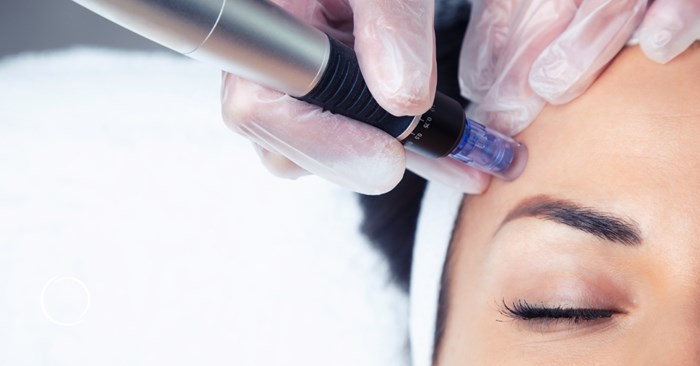
There has been an increasing trend where people are starting their plastic surgery journey earlier in life with more minimally invasive treatments. This approach can not only give patients a fresh, healthy glow in their 30s and 40s, but also help stave off more significant surgical procedures until later in life. Like banking, it is an investment. You are making a deposit today that sets you up for gains later in life.
By "collagen banking" in their 30s, some patients hope to build, support and maintain crucial biological structures by boosting their body's natural collagen production. Essentially, depositing collagen today in hopes that the investment will pay off with greater dividends later.
Can collagen banking help you preserve this natural protein, making you look younger and more radiant, or is it another flash-in-the-pan beauty trend designed to empty your wallet and leave you looking and feeling hollow?
What is collagen banking?
If you haven't heard of collagen banking or have only heard the phrase in passing on social media and don't know what it means, don't worry.
"Collagen banking is a term that has migrated from dermatology and aesthetic medicine into the consumer vernacular," said Lara Devgan, MD. "And it describes something real even if the phrase itself is relatively new."
It is a concept rooted in science that acknowledges that as we age, our bodies naturally start to wind down the production of certain components. For women in their 40s and 50s, there is a significant drop in hormones, leading to perimenopause and eventually menopause. However, hormones are not the only things that decrease as we age. Collagen slowly declines as we get older.
"Collagen banking is the idea that since your skin steadily loses collagen as you age," said Roy Kim, MD. "You should start replenishing it earlier and more aggressively rather than waiting until the loss is visible. The math is unforgiving for women in particular, who lose about 30 percent of their skin collagen in the first five years after menopause and then another 2 percent per year for the next decade and a half."
This philosophy extends beyond procedures alone and into everyday habits that support long-term collagen production.
"Banking is the strategy of staying ahead of that curve," said Dr. Kim. "The foundation is lifestyle – clean diet with adequate protein, biotin and collagen supplements, vitamin C, regular exercise, sun protection and no smoking. On top of that, you layer in collagen-stimulating treatments. In the United States, the genuine collagen builders are microneedling, RF microneedling, lasers and prescription-grade skincare, with topical retinoids, prescription Retin-A being the gold standard at home."
There are financial banks, blood banks and even fat banks, all working in much the same way. These institutions give you a place to deposit something valuable, so that you can make withdrawals later when you need them.
Dr. Devgan describes collagen-banking treatments that help the body boost its natural collagen production.
"Collagen banking refers to the practice of proactively stimulating collagen production earlier in life, before significant loss has occurred, in order to build and preserve a denser collagen reserve that will serve as a structural buffer against the inevitable decline that comes with age," said Dr. Devgan. "The analogy to financial banking is apt – you are making deposits when your account is healthy rather than trying to recover from a deficit. It is a preventive philosophy rather than a corrective one, and it represents a meaningful shift in how patients and physicians are thinking about aesthetic longevity."
Why collagen is important as individuals age
Why all the talk about collagen? It's because it is one of the most abundant and critical proteins in the human body. Collagen provides structural support to soft tissues, such as skin, bones and tendons. Once collagen production in the body starts to decrease, you aren't just going to see the difference; chances are, you are going to feel it as well. Yes, the protein improves skin elasticity and can also help reduce joint pain and stiffness.
"Collagen is the primary structural protein of the skin," said Dr. Devgan. "It provides tensile strength, thickness and the resilience that gives young skin its quality. Beginning in the mid-20s, we lose approximately 1 percent of our dermal collagen per year. By menopause, that rate accelerates significantly due to the loss of estrogen, which plays a direct role in collagen synthesis. The clinical consequences are visible – skin thins, loses its rebound quality, develops fine-texture changes and becomes less able to support the overlying structures. What patients experience as aging skin is, at a biological level, largely a collagen story. Restoring collagen after significant loss is considerably harder than preserving it before that loss occurs, which is the central argument for early intervention."
Learning which procedures can help stimulate collagen and which are just selling you an idea, not real results, can be confusing.
Finding collagen-stimulating treatments that work for you
Deciphering fact from fiction can be challenging when so much misinformation and anecdotal stories are floating around. Numerous products, creams, supplements and procedures claim to help deliver results and increase collagen production. Yet not all treatment options are created equal and can give you measurable benefits.
How do you know which treatments are backed by science and results and which are selling you a pipe dream?
"The evidence base is strongest for a defined set of interventions," said Dr. Devgan. "Topical retinoids, prescription tretinoin in particular, have decades of peer-reviewed data demonstrating increased collagen synthesis, decreased matrix metalloproteinase activity and measurable improvements in dermal thickness. They remain the gold standard of collagen-preserving topical therapy."
Retinoids remain the most popular topical anti-aging treatment on the market today, and for good reason. They work. Retinoids are a vitamin-A-based product approved by the U.S. Food and Drug Administration (FDA) back in 1971 as an acne treatment. Prescription retinoids help prevent clogged pores and reduce the appearance of acne scars, fine lines and wrinkles.
Beyond topical skincare, several in-office procedures can also help stimulate collagen production and improve skin quality.
"There are a number of procedures that stimulate collagen production and help improve skin quality," said Jeffrey Lisiecki, MD. "Microneedling, certain lasers, facial fat grafting and nano fat grafting are great examples."
While collagen-stimulating procedures span a wide range of techniques, energy-based treatments remain some of the most extensively studied.
"Laser resurfacing, particularly fractional CO2 and erbium platforms, stimulates robust neocollagenesis through controlled thermal injury and has well-documented histologic evidence of new collagen formation," said Dr. Devgan. "Radiofrequency devices, both microneedling RF and external platforms, work through thermal stimulation of fibroblasts and have a growing evidence base. Microneedling with PRP leverages the growth factors in platelet-rich plasma to enhance the wound-healing and collagen-remodeling response."
Although neurotoxins do not stimulate collagen production on their own, Dr. Devgan also said these products can help prevent repetitive muscular contractions, which, over time, can degrade skin quality. When used in combination with other treatments, neurotoxins may help preserve structural integrity, boosting results.
Yet another potential avenue for patients interested in collagen banking is biostimulatory products.
"Biostimulatory fillers such as poly-L-lactic acid and calcium hydroxylapatite work by triggering a fibroblast response that produces new collagen around the injected material," said Dr. Devgan. "This is mechanistically different from volume replacement and represents a legitimate collagen-stimulating intervention."
These biostimulatory injectables are a hot topic, especially in overseas markets.
"Korea is well ahead of the United States on this front, with skin boosters like PDLLA, ECM-based products and the newer-generation HA (hyaluronic acid) boosters that are not yet approved here," said Dr. Kim. "Until the regulatory picture changes, American patients have to bank on collagen with the tools the FDA allows – diet, exercise, supplements, RD microneedling, some energy devices and possibly skin injectables."
Supplementing with supplements
Chances are, you've also been inundated with ads and content that tout the benefits of oral collagen supplements as a means of boosting collagen production. Health and wellness stories carry a wide variety of powders, pills and gummies that claim to help boost collagen production and enhance your skin, hair and nails.
Do these supplements work? It seems the jury is still out on that one.
"Oral collagen supplements do appear to help improve skin elasticity and hydration, but the effect of them alone is pretty modest," said Dr. Lisiecki.
Unlike other supplements, such as creatine, there isn't much concrete data on collagen's effectiveness. Combine that with different formulations and little regulation on supplements, and finding an oral collagen supplement can be like trying to find a needle in a haystack.
"Many oral collagen supplements have limited evidence for dermal benefit," said Dr. Devgan. "The bioavailability of ingested collagen peptides and their ability to selectively deposit in skin, rather than being metabolized as a general amino acid substrate, remains an area of active and unsettled research. I do not discourage patients from taking them, but I am honest that the evidence does not yet support the claims most supplement marketing makes."
She further explained that a collagen supplement could potentially enhance procedural results.
"There is a plausible biological rationale," said Dr. Devgan. "Providing the amino acid substrate, particularly glycine, proline and hydroxyproline, during a period of active collagen synthesis following a procedure could theoretically support the remodeling process. Some small studies suggest a benefit. I think of it as a reasonable adjunct rather than a primary intervention, and I frame it that way for patients."
However, a supplement alone won't be doing all the heavy lifting. At best, it may offer a slight boost to a collagen-stimulating procedure, but a healthy diet, exercise and skincare routine are probably the best ways to enhance any procedure.
When should you start collagen banking? Sooner than you think!
"The honest answer is earlier than most people think," said Dr. Devgan. "Collagen loss begins in the mid-20s, which is when the preventive argument for retinoids becomes relevant. By the early 30s, the case for procedural collagen stimulation, including laser treatments, RF microneedling and biostimulatory fillers, is clinically sound. The patients who will have the best skin at 50 are, in my experience, the ones who started paying attention at 30 rather than the ones who began aggressive treatment at 45."
In the case of collagen banking, sooner is better than later because, for optimal results, you want to build and preserve collagen reserves. It will be more challenging to rebuild collagen stores once the protein has already been lost.
"Collagen banking is best begun when you are young, and your body's natural collagen production has just begun to decline, so consider starting in your mid- to late-20s and certainly in your 30s," said Dr. Lisiecki.
That's not to say you can't explore collagen banking as you get older, but for optimal results, it's best to start early. That brings us full circle from where we started – the trend of starting smaller procedures earlier to enhance your look today and set yourself up for greater returns down the road.
"The collagen banking framework is useful precisely because it reframes aesthetic medicine as a longitudinal investment rather than a series of reactive corrections," said Dr. Devgan. "That shift in thinking tends to produce better outcomes, better patient satisfaction and a more rational approach to what is and is not worth doing."
To find a qualified plastic surgeon for any cosmetic or reconstructive procedure, consult a member of the American Society of Plastic Surgeons. All ASPS members are board certified by the American Board of Plastic Surgery, have completed an accredited plastic surgery training program, practice in accredited facilities and follow strict standards of safety and ethics. Find an ASPS member in your area.