Is viral beauty aging well? Plastic surgeons on the face trends filling your feed
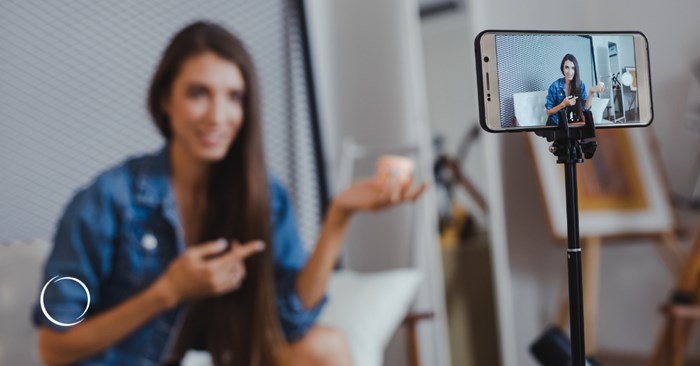
Spend just a few minutes scrolling through TikTok or Instagram, and you're likely to come across endless videos promising sharper jawlines, smoother skin or a more sculpted face using everything from facial taping and gua sha to face yoga and elaborate "morning shed" routines. While many of these viral beauty trends rack up millions of views and enthusiastic testimonials, it can be difficult to separate what's actually backed by science and what's simply clever marketing and deceptive visual effects.
As social media continues to shape the way that younger generations think about beauty, patients are arriving at consultations more informed than ever, but also with more questions. Do these techniques actually work? Can they replace professional treatments? Do any carry potential risks?
The answers are often a bit more nuanced than a quick viral video suggests, making expert guidance increasingly valuable. Understanding which social media beauty trends have legitimate evidence behind them and which are unlikely to deliver lasting results can help patients make more informed decisions about their skin and facial appearance.
We spoke with ASPS Member Surgeons Suzanne Trott, MD, and Jerry W. Chang, MD, FACS, for their thoughts around some of today's biggest social media beauty trends and what patients should really know before adding them to their daily routines.
Social media changed the consultation, but that's not necessarily a bad thing
There's no question that social media has transformed the way that patients approach aesthetic medicine. According to both surgeons, today's consultations often begin with patients who have already spent hours researching procedures, following surgeons online and learning aesthetic terminology before ever stepping into the office.
"Over 22 years as a double board-certified plastic surgeon in Beverly Hills, the industry has morphed and changed in many ways," said Dr. Trott. "Once, the number one procedure I saw was breasts, but now faces have become the number one procedure people are asking about. Patients also have much more to reference now, so they bring in pictures of what they want to look like. Patients are more specific about even the smallest details than ever before, which I love because it gives them the vernacular to explain their expectations."
This greater access to information is reshaping not only what patients ask for, but also how they choose and build relationships with their surgeons.
"Many patients come into the office already familiar with their surgeon's work, personality and areas of expertise because they've followed them online," said Dr. Chang. "In a sense, they've already built a level of trust and rapport before the consultation even begins."
This new generation of patients is also arriving with a much stronger understanding of available procedures than previous generations.
"Patients tend to be much more informed about the procedures and treatments available to address their concerns," said Dr. Chang. "Through before and after photos, educational videos and other online content, they often arrive with a basic understanding of their options."
Of course, information alone isn't enough.
"The role of a board-certified plastic surgeon is to help patients understand what's realistic, appropriate and safe for their individual anatomy and goals," said Dr. Chang.
While patients are better educated than ever, the amount of information online also creates challenges.
"Patients today are much more educated than they used to be, which I actually love because they come in asking thoughtful questions," said Dr. Trott. "But at the same time, there's also more misinformation online than I've ever seen."
The best beauty trends stand the test of time
One of the biggest challenges with viral beauty trends is that popularity doesn't necessarily equal longevity.
"Beauty trends today won't be the same 10 years from now," said Dr. Trott. "Microtrends spread through social media faster than ever. The overdrawn lips of yesterday have become the defined Cupid's bow of today. The exaggerated curves that dominated a decade ago have shifted toward the leaner, athletic silhouette we're seeing now. The point is, these trends will always change, so don't chase them. Chase looking like yourself, just a better version. Authenticity never goes out of style."
With trends evolving so quickly, surgeons encourage patients to consider how today's choices will hold up over time.
"One of the best ways to evaluate a trend is to ask whether it will still look good years from now," said Dr. Chang. "The best aesthetic treatments stand the test of time rather than simply reflecting a momentary social media trend."
He pointed to buccal fat removal as one example of a trend that may not age well.
"Facial volume is closely associated with youthfulness," said Dr. Chang. "Many people who remove buccal fat at a young age may find themselves wishing they had maintained that fullness as they age."
Instead, he encourages patients to prioritize balance over whatever happens to be trending online.
"We've already seen this happen with the highly exaggerated BBL (Brazilian butt lift) trend," said Dr. Chang. "Many patients are now seeking more natural proportions, or even reversal procedures."
Temporary tricks vs lasting results
Some of today's most popular TikTok beauty trends promise dramatic facial changes without ever stepping inside a medical office. But how much can these routines actually accomplish?
Facial taping
Search facial taping on TikTok, and you'll find thousands of creators claiming overnight wrinkle reduction. However, both surgeons agree that the results are, at best, temporary.
"Facial taping may create temporary smoothing, but there is no strong evidence that it prevents wrinkles long term," said Dr. Chang. "Any visible improvement is generally short-lived."
These temporary effects should not be mistaken for meaningful or sustained changes to the skin.
"It may look great after removal for a few hours, but I don't think this has any long-term benefits," said Dr. Trott.
The morning shed routine
The morning shed trend, where users layer multiple masks, patches, tape and skincare products overnight before revealing glowing skin in the morning, has become another viral sensation. Neither surgeon is particularly convinced.
While Dr. Chang noted that he isn't familiar enough with the trend to make broad claims, Dr. Trott is more skeptical.
"It doesn't work," said Dr. Trott. "But it may clog your pores!"
Ice rolling
Using ice rollers and frozen facial tools can absolutely feel refreshing, but expectations around them should remain realistic.
"Ice rolling can temporarily reduce puffiness and inflammation by causing blood vessels to constrict," said Dr. Chang. "It may create a tighter, refreshed appearance for a short period of time. The key is understanding that these effects are temporary."
The benefits you see on social media are likely exaggerated.
"Many would say it's overhyped," said Dr. Trott. "I think cold plunges are better and have more impressive data."
Can you actually exercise your way to a better face?
Perhaps no trends have generated more debate than face yoga, mewing and jawline training devices. The idea of reshaping your face naturally through daily exercises is definitely appealing. However, science tells a more complicated story.
When it comes to face yoga, expectations often exceed reality.
"If anything, repeatedly contracting facial muscles may contribute to the very dynamic wrinkles many people are hoping to prevent," said Dr. Chang. "I don't believe face yoga offers meaningful long-term improvements in facial aesthetics."
While face yoga may produce subtle changes with consistent practice, there isn't enough evidence to suggest those results are significant or long-lasting.
"There may be a millimeter difference after noticeable daily exercise over time," said Dr. Trott. But I haven't seen scientific data demonstrating long-term benefits."
Any skepticism around face yoga also extends to mewing and jaw exercises. There is little compelling evidence that jawline devices create lasting improvements in facial contour.
"Skip this one," said Dr. Trott. "And be wary of chewing on plastic."
Which trends actually have some science behind them?
Not every trend is without merit. In fact, both surgeons point to several practices that can offer legitimate, albeit modest, benefits when used appropriately.
Gua sha and lymphatic drainage
Among the more evidence-supported trends are gua sha and lymphatic drainage massages. Both techniques may temporarily reduce fluid retention.
"Gua sha can help temporarily reduce puffiness and swelling, which may make the face appear more sculpted for a short period of time," said Dr. Chang. "However, it does not permanently reshape facial contours or create long-term lifting effects."
A lymphatic drainage massage works similarly by temporarily reducing swelling.
"I think draining the lymphatic system is always a nice detox treatment," said Dr. Trott, adding that lymphatic drainage may also be particularly helpful for patients following surgery or filler, as swelling may temporarily affect lymphatic flow.
LED face masks
Home LED devices have exploded in popularity over the last few years. These devices have some legitimate research supporting their effectiveness, particularly light therapy, though marketing often exaggerates the results.
"There are modest improvements and real science backing LED face masks," said Dr. Trott. "Unfortunately, the ones you use at home usually aren't strong enough to see a huge difference, but they can produce some improvement in mild collagen production."
Collagen supplements
Can drinking collagen really improve your skin? The answer isn't quite as straightforward as many advertisements suggest.
"The science is still evolving, and collagen supplements are not as simple as 'drink collagen, and it goes directly to your skin,'" said Dr. Chang.
While collagen supplements aren't a direct shortcut to rebuilding skin, emerging evidence suggests certain formulations may offer benefits over time.
"Hydrolyzed collagen peptides show improvements in skin elasticity, hydration and wrinkle appearance after eight to twelve weeks," said Dr. Trott.
Trend-proof beauty starts with realistic expectations
Perhaps the key takeaway from both surgeons is that social media shouldn't replace individualized medical advice, and heavily edited images often create impossible standards.
"The biggest misconception is the idea that everyone should strive for perfect facial symmetry," said Dr. Chang. "Small asymmetries can add character, individuality and authenticity. Attempting to erase every imperfection can actually create results that appear less natural."
Any desire to eliminate every perceived imperfection can be amplified by filters, which allow patients to become accustomed to a digitally perfected version of themselves.
"I have patients who come in and tell me they want a facelift because they've been blurring their wrinkles for years," said Dr. Trott.
So, what should patients consider before seeking plastic surgery for the latest trend?
"My advice is simple," said Dr. Chang. "Don't assume every product or treatment appearing in your social media feed is worth your time or money. Research it, seek information from credible sources and, if possible, consult a qualified medical professional."
Choosing the right surgeon ultimately matters far more than chasing the latest algorithm and trend, as your plastic surgeon will guide you on your journey.
"Be flexible during your consultation," said Dr. Trott. "What you're actually chasing may be achievable with a different process. Everyone is different. And make sure you're going to someone who's board certified and that you vet them."
Social media has made beauty advice more accessible than ever, but popularity doesn't always go together with effectiveness. While some viral beauty trends may offer temporary benefits or complement an overall skincare routine, others simply can't deliver the structural changes that they promise.
Understanding the difference between short-term trends and evidence-based treatments is an important part of making informed decisions about your appearance. By approaching social media beauty trends with curiosity, healthy skepticism and guidance from a board-certified plastic surgeon, patients can focus less on chasing every viral moment and more on building routines and treatment plans that support healthy, natural-looking results over the long-term.
To find a qualified plastic surgeon for any cosmetic or reconstructive procedure, consult a member of the American Society of Plastic Surgeons. All ASPS members are board certified by the American Board of Plastic Surgery, have completed an accredited plastic surgery training program, practice in accredited facilities and follow strict standards of safety and ethics. Find an ASPS member in your area.