Spooky-sounding surgeries that aren't actually scary
Plastic surgery has a vocabulary problem – or, at least, a branding problem. Terms like "cadaver tissue graft," "fat harvesting" and "skin flap" can sound more at home in a Halloween movie than in an operating room. Add "vampire treatments" to the mix, and it's easy to understand why someone encountering these plastic surgery terms for the first time might do a double – or triple – take.
Fortunately, the names are often far more dramatic than the procedures themselves. Many of these scary-sounding procedures are established techniques used across aesthetic and reconstructive plastic surgery to replace missing tissue, restore anatomy, support healing or make use of the body's own biological resources. Some have been used for decades, while others have picked up spooky nicknames thanks to social media and clever marketing. And understanding what they actually involve can make them far less frightening.
In honor of Halloween, we're pulling back the curtain on five of the spookiest-sounding plastic surgery terms whose names could use a little demystifying. To help explain what's really happening behind the scary terminology, we spoke with ASPS Member Surgeons Lara Devgan, MD, and Michael Dobryansky, MD, FACS, for their insights around these fascinating procedures.
Cadaver tissue grafts: Yes, we said cadaver!
Few medical phrases trigger quite the same record-scratch moment as "cadaver tissue," but donor tissue is neither experimental nor the recognizable piece of another person that some patients may imagine.
"Donor tissue is exactly what it sounds like – tissue that has been generously donated by someone who chose to be an organ and tissue donor," said Dr. Dobryansky. "In plastic and reconstructive surgery, donor tissue is often used to supplement a patient's own tissue and can help avoid the need to harvest tissue from another part of the patient's body."
Plastic surgeons may use donor cartilage, tendon or specialized tissue matrices. Applications can range from rhinoplasty and ear or facial reconstruction to breast reconstruction and hand procedures. And there are extensive steps between donation and the operating room.
"Donor tissue comes through regulated tissue-banking systems, with extensive donor screening, medical and social history review, infectious-disease testing and tissue-specific processing before it ever reaches an operating room," said Dr. Devgan. "Depending on the product, tissue may also be cleaned, sterilized, decellularized, preserved or otherwise processed to reduce immunologic and infectious risk."
Some biological matrices then function as scaffolds into which the patient's own cells and blood vessels can gradually grow, while other grafts provide structural support. In other words, "cadaver" may get all of the attention, but the medical story is really about the donation, processing and reconstruction.
Vampire treatments: More biology than Bram Stoker
"Vampire facial" may be one of aesthetic medicine's most memorable nicknames, but no fangs are involved.
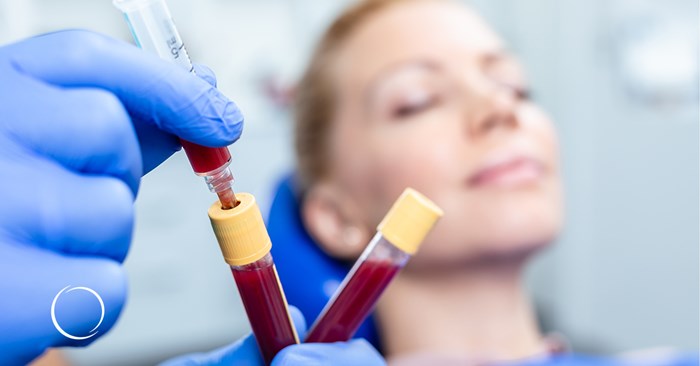
"The 'vampire' part is mostly marketing," said Dr. Devgan. "A small amount of the patient's own blood is drawn and processed to separate or concentrate components such as platelets, fibrin, plasma and growth factors, which can then be used therapeutically."
Patients may encounter two terms: platelet-rich plasma (PRP) and platelet-rich fibrin (PRF). Both are derived from a patient's blood but are prepared differently. They have been used in a variety of areas, including hair restoration, wound healing and treatments intended to support skin quality. Marketing can make things murkier.
"One of the most common misconceptions is that these treatments can reverse aging entirely or deliver dramatic results after a single session," said Dr. Dobryansky. "While many patients experience meaningful improvements in skin quality, healing or hair growth, results tend to be gradual and vary from person to person. Like most treatments in aesthetic medicine, they are tools that may contribute to improvement, not magic solutions."
Part of the confusion may stem from the idea of using the body's own materials, which can create unrealistic expectations about both what these treatments can accomplish and how risk-free they really are.
"The biggest misconception is that because something comes from your own body, it must be completely risk-free or capable of regenerating anything," said Dr. Devgan. "Neither is true."
So, despite the supernatural nickname, patients should approach these treatments in a decidedly unsupernatural way. Ask what's being used, why it's being recommended, what evidence supports that use and who is performing the procedure.
Fat harvesting: The body's own recycling program
If "harvesting" makes you picture a scythe rather than a cannula, the reality is much less theatrical.
"Fat harvesting simply means removing a small amount of the patient's own fat so it can be used elsewhere," said Dr. Devgan. "It is usually collected with gentle liposuction from an area such as the abdomen, thighs or flanks. I often describe it as biologic recycling – taking tissue from an area where it is less useful and placing it where it can restore contour or softness."
After collection, the fat is then processed before being carefully transferred to its new location. Fat grafting, in its simplest form, may sound like moving fat from point A to point B, but successful transfer involves considerably more finesse.
"The procedure is both an art and a science, with significant attention paid to how the fat is prepared and where it is placed to achieve the safest and most natural-looking outcome," said Dr. Dobryansky.
Plastic surgeons can use fat transfer in facial rejuvenation, breast reconstruction and contouring, hand rejuvenation and selected body contouring procedures, among many other applications. However, one important caveat remains.
"Not every transplanted fat cell survives, and that is an important part of counseling," said Dr. Devgan. "A portion of the grafted fat will be reabsorbed as the tissue establishes its new blood supply, which is why technique and conservative overcorrection matter."
The fat that successfully establishes a blood supply can remain long term and behave like fat elsewhere in the body. So "harvesting" is really just the first step in a carefully controlled transplantation process.
Skin flaps: Much more precise than the name suggests
Of all the plastic surgery terminology on our Halloween list, "skin flap" may win the award for the least glamorous description of an extraordinarily sophisticated concept.
"A flap is living tissue that is moved from one location to another while maintaining its blood supply – or, in microsurgery, having that blood supply surgically reconnected," said Dr. Devgan. "A skin graft, by contrast, is completely detached from its original blood supply and has to develop a new one from the recipient bed."
While it's called a "skin flap," skin isn't necessarily the only tissue involved. Depending on the reconstructive need, a flap may contain skin, fat, fascia, muscle or even bone. Plastic surgeons use flaps to reconstruct areas affected by cancer surgery, trauma, burns and complex wounds, as well as in breast, facial and extremity reconstruction. The procedures span a wide range.
"Many patients assume that a flap reconstruction automatically means a major, highly complex surgery," said Dr. Dobryansky. "In reality, flap procedures vary significantly. Some involve tissue moved only a short distance and can be performed on an outpatient basis, while others are more complex and may require hospitalization."
For more complex flap surgery, a surgeon's understanding of blood supply becomes particularly important.
"Blood supply is everything in flap surgery," said Dr. Devgan. "A surgeon needs an intimate understanding of arteries, veins, perforators, tissue planes and vascular territories because the transferred tissue must remain alive. Flap surgery is really applied vascular anatomy, and millimeters can matter."
Flap may be a blunt-sounding word, however, the surgery behind it can be anything but.
Tissue expanders: Stretching with a purpose
The mental image conjured up by "tissue expander" isn't particularly gentle either. Yet these temporary devices harness something that the human body already knows how to do – adapt gradually.
"A tissue expander is a temporary device placed beneath the skin to gradually create additional tissue for reconstruction," said Dr. Dobryansky. "Over time, the expander is filled with sterile saline, allowing the skin and surrounding tissues to stretch."
Expansion generally happens incrementally during a series of office visits rather than all at once. Patients may experience temporary tightness or pressure as saline is added. Tissue expanders are particularly well known in staged breast reconstruction, but they can also be used in scalp reconstruction, burn reconstruction, congenital conditions and other situations in which additional healthy tissue is needed. And "stretching" doesn't tell the entire biological story.
"It is more sophisticated than simply stretching a rubber band," said Dr. Devgan. "Mechanical tension triggers biologic adaptation, including changes in cellular activity and growth of skin and soft tissue over time. In other words, we are not merely deforming existing skin – we are taking advantage of the body's ability to remodel and generate additional tissue."
Another common surprise? An expander generally isn't intended to remain permanently.
"Many patients initially confuse tissue expanders with permanent implants and are surprised to learn that expanders are temporary devices," said Dr. Dobryansky.
The name may sound a little "Frankensteinian," but the underlying principle is elegant – gradually creating the tissue necessary to make reconstruction possible.
Medical terminology has never really been too concerned with public relations. In plastic surgery, that can leave patients confronting terms like cadaver tissue, harvesting, flaps and expanders before they have any idea what those words actually describe. But the spooky name usually isn't the important part.
These techniques represent a broad spectrum of aesthetic and reconstructive plastic surgery, from using a patient's own fat to restore lost volume to moving living tissue to rebuild anatomy after cancer or trauma. Understanding plastic surgery terms can help replace an unsettling mental image with a much clearer picture of what a surgeon is actually proposing and why.
However, this doesn't mean that every treatment is appropriate for every patient or that an innocuous explanation makes a procedure risk-free. Patients should understand the potential benefits, limitations, alternatives and risks of any treatment that they're considering and seek care from an appropriately qualified board-certified plastic surgeon.
To find a qualified plastic surgeon for any cosmetic or reconstructive procedure, consult a member of the American Society of Plastic Surgeons. All ASPS members are board certified by the American Board of Plastic Surgery, have completed an accredited plastic surgery training program, practice in accredited facilities and follow strict standards of safety and ethics. Find an ASPS member in your area.

