The evolution of breast implants: Recent advances in cosmetic surgery
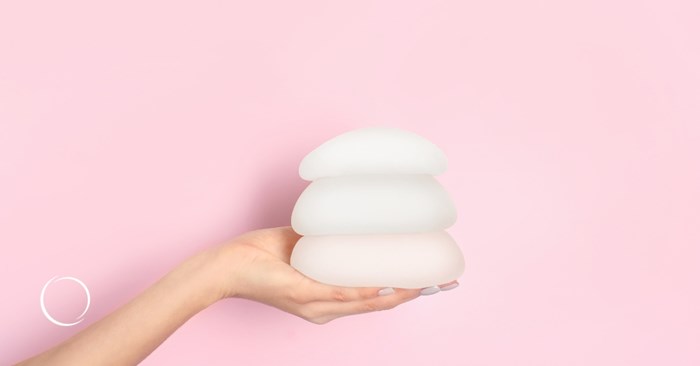
One of the most sought-after plastic surgery procedures for many women is breast augmentation. This is supported by the fact that breast augmentation has ranked as the second most popular plastic surgery procedure for the last several years. Whether with implant or fat transfer, it offers women the opportunity to shape and size their breasts to their ideal proportions and goals.
It comes as no surprise that, with such demand for the procedure, there are emerging innovations in the world of breast implants that help patients achieve better, more lasting results. To learn more about recent advances in breast augmentation and implants, we reached out to ASPS Member Surgeons John Burns, MD, and Kristy Hamilton, MD.
Recent evolutions within the realm of breast implants
While there's no denying that breast augmentation remains one of the most enduring and popular surgical options for women, there have been recent changes in the specialty that are driving its overall evolution.
"The overview for this would be that the trend is for a smaller implant and a more natural result," said Dr. Burns. "Whereas ten years ago, our average implant size was in the 350-450 cc range, now we are doing surgeries in the low 200s. The new generation very much prefers small implants – it is a real change, and it happened quickly! Another way to look at it is shape over size; people are more focused on a pretty shape than an over-the-top augmentation."
A societal shift toward a more "natural" aesthetic has led to women who want breast implants proportional to their bodies rather than going as big as possible.
"We've seen it in the face, body and breast – the return to natural," said Dr. Hamilton. "It started a few years ago during the pandemic, and I really don't see us going back. We're capable of producing these really natural results now. I think a lot of people in the past who pursued aesthetic plastic surgery had to accept that if they wanted an enhancement, it had to look a little overdone. It doesn't mean that it's not still happening, but it means we're more in an era of customization. If you want a smaller implant, we can do that. If you want an augmentation that still allows you to do weightlifting, we can do that, too. Women now get to decide instead of being told what they're going to have."
Emerging breast implant and augmentation technologies
There are merging technologies and techniques that align with this shift towards smaller, more natural-looking implants.
"Obviously, there's Motiva – that's been a real disruptor in the industry," said Dr. Burns. "It's not necessarily a new product – they've been around worldwide since 2010 – but it is new to the U.S. They make great claims and have research to back it up, along with lower capsular contracture rates."
New implants hitting the market give patients more options than ever for their breast augmentation.
"The new technology is the Motiva implant," said Dr. Hamilton. "It's a departure from the purely smooth shell, with a four-micron variation, that has low capsular contracture rates and is super stretchy. This lends itself to a new set of techniques, known as Preserve, that are pushing the boundaries of what is possible in breast implant procedures."
What is Preserve? This less-invasive technique is increasingly used by surgeons to place Motiva implants, offering patients immediate results with minimal downtime.
"Preserve is a philosophy as well as a technique utilizing a specific set of tools," said Dr. Hamilton. "What is so special about it is the degree of support that these implants get from preserving all of this natural breast tissue. Other than cutting this 2 ½ cm in the skin, everything beyond that is parted, like parting blades of grass, briefly by creating this tunnel with a specialized set of tools and opening the space with a controlled balloon expansion. You can place the implant in the exact spot that you want and have all of this lower breast tissue that holds the implant in place, almost like a nest. The implants settle within a few weeks, and the results look fantastic!"
In addition to smaller, more natural-looking implants, some companies are amping up the shape and size to create more dramatic-looking implant options.
"MENTOR has made implants that are massive," said Dr. Burns. "It used to be that 800 cc was the biggest, but they're making them up to 1400 cc now. This is FDA-approved for breast reconstruction, but is being used for women who want huge implants. MENTOR kind of stepped out of the box here in making a larger implant."
Another point of evolution within the world of breast implants is the focus on material quality.
"Other companies have done things such as upgrade the gel in their implants," said Dr. Burn. "Allergen makes three types of gel – soft, medium, hard. The soft creates a more natural teardrop shape, while the hard gives you the true implant look."
Additionally, many surgeons are increasingly turning to the innovation of fat grafting and alloClae, a ready-to-use fat filler, to aid in breast augmentation for individuals with lower BMIs.
"The advent of fat grafting to the breast or alloClae has allowed me to convert some of these thinner, leaner athletic women with minimal breast tissue to become candidates for implants in front of the muscle without as much implant edge visibility," said Dr. Hamilton.
Plus, many plastic surgeons are using mesh with breast augmentation procedures.
"A lot of surgeons are using biodegradable scaffolding made with PDL/PDS suture materials," said Dr. Burns. "It goes into the implant pocket and supports it to give it more strength. This is very helpful in patients who are at risk for bottoming out, where the implant stretches the pocket and they hang a little too low."
Many aesthetic procedures evolve and change over time. Now, breast augmentation is getting an upgrade. With innovations such as Motiva and alloClae, as well as new techniques like Preserve and mesh, there is no doubt that this field will continue to change and expand during the decades to come. Consult with a board-certified plastic surgeon to see what options are right for the results you want.
To find a qualified plastic surgeon for any cosmetic or reconstructive procedure, consult a member of the American Society of Plastic Surgeons. All ASPS members are board certified by the American Board of Plastic Surgery, have completed an accredited plastic surgery training program, practice in accredited facilities and follow strict standards of safety and ethics. Find an ASPS member in your area.