Your partner in skin cancer recovery: How plastic surgeons help restore what's removed
When a patient is diagnosed with skin cancer – including on the nose, cheeks, eyelids and ears — a plastic surgeon may be brought in to help
We have sunscreens lined up in the bathroom and stashed in the car, baseball caps hanging by the front door and sun shirts folded in our dresser. We know how important sun protection is, and there is certainly no shortage of sunscreens to choose from – mineral, chemical, tinted, sheer, lotion or stick; there's a formula for every preference. What many of us may not know, however, is that an estimated one in five Americans will develop skin cancer by the age of 70, according to the Skin Cancer Foundation, depending on factors such as the location and size of the cancer. Plastic surgeons can play an important role in treatment and recovery.
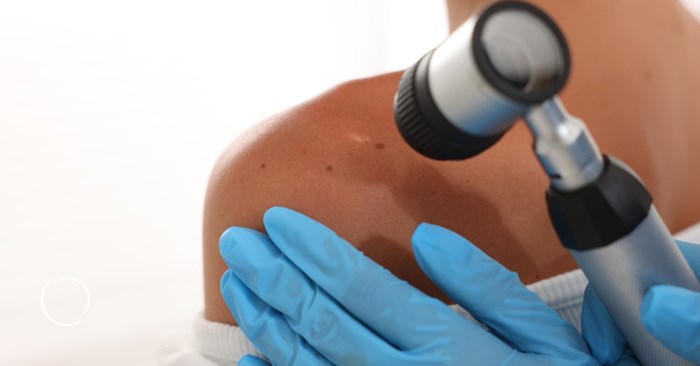
Skin cancer is the only cancer we can see by looking at our skin. That makes early detection possible during yearly skin checks with dermatologists, who also remove many skin cancers. However, sometimes dermatologists may refer a patient to another doctor for treatment. Mohs surgeons – who might be dermatologists or plastic surgeons – use a special technique to remove the deadliest skin cancers, such as melanoma, with minimal scarring. Surgical oncologists can also remove melanomas. Plastic surgeons might be called in to remove melanoma or nonmelanoma skin cancers in prominent areas or in difficult-to-address areas such as the nose, eyelids, ears, feet or ankles. Nonmelanoma skin cancers include the most common form of skin cancer, basal cell carcinoma, which tends not to spread to other parts of the body. Melanoma can spread or metastasize to other organs, making early detection and removal critical, even lifesaving.
Removing cancer while preserving healthy tissue
A plastic surgeon often removes nonmelanoma or melanoma skin cancer when the surgery involves the face or another prominent area, such as the forearms or shoulders, and "patients want a cosmetically appealing scar," said Andrew Chen, MD, who specializes in reconstructive surgery and has published clinical-based guidelines for reconstructive procedures following skin cancer removal.
Plastic surgeons work to "minimize the amount of tissue that's removed," said Dr. Chen, creating the smallest scar possible. To do so, plastic surgeons may work alongside a pathologist in the operating room to remove the entire skin cancer while limiting removal of healthy surrounding tissue. The pathologist tests tissue as it is removed to see if it is cancerous, and once the plastic surgeon is removing only healthy tissue, they stop and sew up the area. The way the tissue is sutured affects the appearance of postsurgical scars, and plastic surgeons try to minimize tension to reduce scarring.
Sometimes, a patient may have a melanoma removed by a Mohs surgeon, and then have the wound that's left behind sewn by a plastic surgeon, explained Sara Dickie, MD, who specializes in reconstructive surgery, including for skin cancer patients.
"The goal of Mohs surgery is to remove the cancer and leave as much viable, healthy, noncancerous tissue behind," said Dr. Dickie. "Frequently, it's done on cosmetically sensitive areas, such as abutting the lips, on the eyelids, the nose, the hairline."
When this happens, it leaves behind a hole that needs to be closed.
"As the plastic surgeon, my goal is to create the most aesthetically pleasing result – either using a flap or certain closure techniques to make sure the scars are hidden in creases, shadows or junction points between the subunits of the face," said Dr. Dickie, adding that plastic surgeons take into account a patient's facial skin and anatomy to ensure the scar is as minimally visible as possible.
Skin cancer removal on relatively taut areas such as the nose, eyelids and ears can pose especially unique challenges that plastic surgeons are well-equipped to handle.
"There's no loose skin on the nose," said Dr. Chin. "For example, you can't pinch the skin."
Without enough laxity, after a skin cancer has been removed, it's harder to bring the remaining skin back together to suture it. After a skin cancer is removed – whether by the plastic surgeon, Mohs surgeon or dermatologist – a plastic surgeon may perform a reconstructive surgery, such as a local flap reconstruction using neighboring tissue to cover a wound or a skin graft taken from skin that's not adjacent to the wound.
"I try to take grafts for the face from the face; for anything in the nasal region, I usually try to use forehead skin up near the hairline," said Dr. Dickie, adding that area can be a good color and texture match for skin around the nose – as can skin from the clavicle, which usually gets the same amount of sun exposure over the years as skin on the face, so it's a similar color. "For larger grafts, we can use skin from behind the ear, but it tends to be lighter and smoother than the skin we're putting it into."
What patients can expect during recovery
Removal of skin cancer and reconstructive surgery shortly after might happen on the same day, but often the reconstructive procedure is a few days later – after testing has confirmed a cancer has been fully removed and no further surgery is needed to excise it. Skin cancers that have gone untreated and grown over time may become so large that more extensive reconstructive surgeries are needed.
"You might need coverage of critical things like exposed bone, exposed tendons or cartilage; those scenarios can be more complicated," said Dr. Chen.
In many cases, depending on the size of the cancer, the scar may not be immediately visible.
"We are actually very good at these reconstructive surgeries; you can rebuild somebody's entire nasal framework if you have to," said Dr. Chen. "We try to disguise or hide the scar by putting it into natural skin folds. A scar that's along the crow's feet of the eye, for example, is much less noticeable."
It can all be a lot to take in, and plastic surgeons support patients through the process with good communication before surgery, discussing the possibilities and timing of surgeries and working with the dermatologist's team "so the patient doesn't have to make a whole lot of separate appointments," said Dr. Dickie.
Caring for scars after skin cancer surgery
Of course, the plastic surgeon's job is not done when the surgery ends.
"We guide patients through healing; we're usually talking about the face, and for female patients, I say you can start wearing foundation and concealer on the scar right after the stitches are out, and men can use tinted sunscreen or tinted moisturizer," said Dr. Dickie, adding that patients are told what to expect in terms of the scar's healing timeline. "If it's a closure with stitches, the scar is going to look pink after the stitches are removed, and it may be a bit raised and firm for several weeks. They'll start to see the scar fading and becoming less visible after about four to six weeks, but the full maturation of the scar is going to take about six months. Sometimes flaps remain visible and swollen for a much longer period of time. Grafts tend to have discoloration for longer periods – [how long] is variable, but it may be about a year."
Depending on the type of surgery a patient had, he or she will be guided in treating their scars with silicone tape or gels, and could receive laser treatments to fade discoloration.
"Following up with patients is important," said Dr. Dickie. "We always have them come for a three-week and a three-month scar check, which they're welcome to cancel, but it's important to keep people really close to the provider because they often have questions, but they don't know how to ask them. If they're not put in a position where they can ask, they're out there thinking, 'Well, this is just the way it is,' or 'I had a bad result,' or 'It's not healing.'"
Using sunscreen during the healing process is crucial.
"We talk to patients about how to take care of their scars afterward, protecting them from the sun so they don't turn into dark scars," said Dr. Chen, noting that means wearing an SPF 30 or higher daily. "Sunscreen has worn off by the time the afternoon rolls around. You have to reapply it every two hours if you're outside. Studies have shown that people don't actually use as much sunscreen as they think they do."
So, slather it on – and consider using a higher SPF, such as 60 or 90, to help account for any unintentional skimpiness in application. Dr. Chen said keeping a scar out of direct sunlight for the first year is the best way to minimize its appearance in the long run. Stay in the shade when possible. Wear sun-protective clothing; if light can shine through it, like a white T-shirt, it offers less protection. And don't underestimate a good sun hat or baseball cap for helping to protect healing scars – and healthy skin – on areas such as the eyes and nose.
To find a qualified plastic surgeon for any cosmetic or reconstructive procedure, consult a member of the American Society of Plastic Surgeons. All ASPS members are board certified by the American Board of Plastic Surgery, have completed an accredited plastic surgery training program, practice in accredited facilities and follow strict standards of safety and ethics. Find an ASPS member in your area.