Plastic surgery involves many choices. The first and most important is selecting a surgeon you can trust.
Choosing an ASPS Member Surgeon ensures that you have selected a physician who:

ASPS Member Surgeons are your partners in cosmetic and reconstructive plastic surgery.
Look for the ASPS Member Surgeon logo.
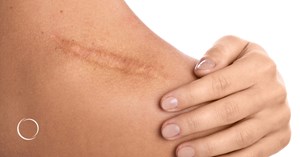
Enhancing your appearance with scar revision surgeryScars are visible signs that remain after a wound has healed. They are unavoidable results of injury or surgery, and their development can be unpredictable. Poor healing may contribute to scars that are obvious, unsightly or disfiguring. Even a wound that heals well can result in a scar that affects your appearance. Scars may be raised or recessed, different in color or texture from surrounding healthy tissue or particularly noticeable due to their size, shape or location.
Your treatment options may vary based on the type and degree of scarring and can include:
Scar revision surgery is meant to minimize the scar so that it is more consistent with your surrounding skin tone and texture.
Although scar revision can provide a more pleasing cosmetic result or improve a scar that has healed poorly, a scar cannot be completely erased.
Scar revision is a highly individualized procedure and you should do it for yourself, not to fulfill someone else’s desires or to try to fit any sort of ideal image. Scar revision can be performed on people of any age and is a good option for you if:
Scar revision is plastic surgery performed to improve the condition or appearance of a scar anywhere on your body. The different types of scars include:
Discoloration, surface irregularities and other more subtle scars can be cosmetically improved by surgery or other treatments recommended by your plastic surgeon. These types of scars do not impair function or cause physical discomfort and include acne scars as well as scars resulting from minor injury and prior surgical incisions.

Hypertropic scars are thick clusters of scar tissue that develop directly at a wound site. They are often raised, red and/or uncomfortable, and they may become wider over time. They can be hyperpigmented (darker in color) or hypopigmented (lighter in color).

Keloids are larger than hypertropic scars. They can be painful or itchy, and may also pucker. They extend beyond the edges of an original wound or incision. Keloids can occur anywhere on your body, but they develop more commonly where there is little underlying fatty tissue, such as on the face, neck, ears, chest or shoulders.

Contractures are scars that restrict movement due to skin and underlying tissue that pull together during healing. They can occur when there is a large amount of tissue loss, such as after a burn. Contractures also can form where a wound crosses a joint, restricting movement of the fingers, elbows, knees or neck.

The type of scar you have will determine the appropriate techniques your plastic surgeon will use to improve your scar.
The success and safety of your scar revision procedure depends very much on your complete candidness during your consultation. You’ll be asked a number of questions about your health, desires and lifestyle.
Medications are administered for your comfort during the surgical procedures. The choices include local anesthesia, intravenous sedation and general anesthesia. Your doctor will recommend the best choice for you.
The degree of improvement that can be achieved with scar revision will depend on the severity of your scarring, and the type, size and location of the scar. In some cases, a single technique may provide significant improvement. However, your plastic surgeon may recommend a combination of scar revision techniques to achieve the best results.
Topical treatments, such as gels, tapes or external compression, can help in wound closure and healing, or to reduce the ability of skin to produce irregular pigment. These products may be used to treat existing surface scars and discoloration, and to aid in healing of scar revision procedures.
Injectable treatments are often used to fill depressed or concave scars. Depending on the injectable substance used and your particular scar conditions, results may last from three months to several years. Therapy must be repeated to maintain results. One form of injection therapy uses steroidal-based compounds to reduce collagen formation and can alter the appearance, size and texture of raised scar tissue.

Surface treatments are most often used for cosmetic improvement of scars. These methods can soften surface irregularities and reduce uneven pigmentation. Surface treatments are a controlled means of either mechanically removing the top layers of skin or changing the nature of tissue. These treatment options include:


Some scars require layered closure. Layered closure is often used where excision extends to tissue below the skin surface or in areas with a high degree of movement. The first step, or layer, requires sub-dermal closure (below the skin surface) with absorbable or non-removable sutures. Layers of closure continue to build, concluding with closure of the remaining surface wound.
Advanced techniques in scar revision include complex flap closure to reposition a scar so that it is less conspicuous, or improve flexibility where contracture has restricted mobility.
Pharmaceutical tissue substitutes may be used if ample healthy tissue is not present for closure of a scar excision. This is more likely with revision of severe burn scars.
Tissue expansion can be a substitute for skin grafts. In this procedure, an inflatable balloon called a tissue expander is placed under the skin near the scar site. Over time, the balloon is slowly filled with sterile solution to expand the area of healthy skin. Once the skin has been stretched sufficiently, the expander and the scar is removed and the stretched skin is moved to replace the scar tissue. This process can involve multiple surgical stages or procedures in order to achieve the final results.
The decision to have scar revision surgery is extremely personal and you’ll have to decide if the benefits will achieve your goals and if the risks and potential complications are acceptable. Your plastic surgeon and/or staff will explain in detail the risks associated with surgery.
You will be asked to sign consent forms to ensure that you fully understand the procedure you will undergo, the alternatives and the most likely risks and potential complications.
Be sure to ask questions: It’s very important to ask your plastic surgeon questions about your procedure. It’s natural to feel some anxiety, whether it’s excitement for your anticipated new look or a bit of preoperative stress. Don’t be shy about discussing these feelings with your plastic surgeon.
Scar revision surgery may be performed in your plastic surgeon’s office, accredited office-based surgical facility, an ambulatory surgical facility or a hospital. Your plastic surgeon and the assisting staff will fully attend to your comfort and safety.
When your procedure is finished, bandages or dressings may be applied to keep the surgical site clean.
You will be given specific instructions that may include: How to care for yourself following surgery, medications to apply or take orally to aid healing and reduce the risk of infection, and when to follow-up with your plastic surgeon.
If you experience shortness of breath, chest pains, or unusual heart beats, seek medical attention immediately. Should any of these complications occur, you may require hospitalization and additional treatment.
Following your physician’s instructions is key to the success of your surgery. It is important that the surgical incisions are not subjected to excessive force, abrasion, or motion during the time of healing. Your doctor will give you specific instructions on how to care for yourself.
Follow all postoperative instructions carefully, including cleansing and at-home treatment regimens, and avoid sun exposure. Your cooperation will influence the outcome of your surgery.
The initial healing phase of a surgical scar revision may include localized swelling, discoloration or discomfort and may take 1 to 2 weeks. Healing will continue for several weeks and as the new scar heals it will slowly refine and fade. With dermabrasion, chemical peel or laser resurfacing, you will experience similar conditions at the treated area, in addition to overall sensitivity.
The results will be long-lastingThe final results of your scar revision surgery will be long-lasting, however it may take several months for your final results to become apparent and in some cases it may take a year for the new scar to fully heal and fade.
The practice of medicine and surgery is not an exact science. Although good results are expected, there is no guarantee, in some situations, it may not be possible to achieve optimal results with a single surgical procedure and another surgery may be necessary.
Cost is always a consideration in elective surgery. Prices for scar revision procedures can vary widely. A surgeon’s cost for scar revision may vary based on his or her experience, the type of procedure used, as well as geographic location. Many plastic surgeons offer patient financing plans, so be sure to ask.
Most health insurance plans will not cover scar revision surgery, related complications or another surgery to revise the appearance of your scar. You must carefully review your health insurance policy.
Your satisfaction involves more than a feeWhen choosing a plastic surgeon for scar revision surgery, remember that the surgeon’s experience and your comfort with him or her are just as important as the final cost of the surgery.