Beyond the facelift: How facial plastic surgery is changing for men
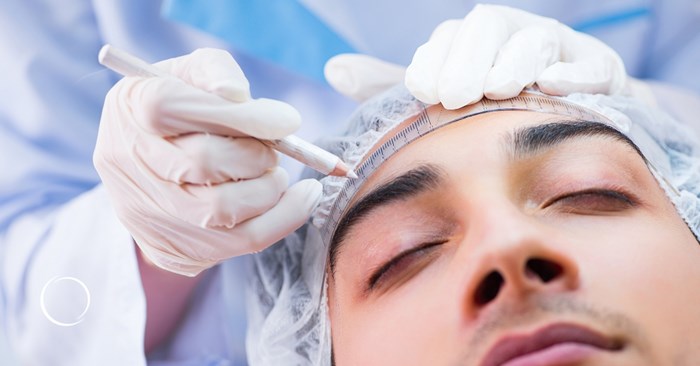
For many years, conversations around facial rejuvenation have largely centered on women. Today, this landscape is evolving. As the stigma surrounding aesthetic procedures continues to fade, more men are exploring facial plastic surgery to look refreshed, maintain a competitive professional presence and better reflect how energetic they feel. Rather than pursuing dramatic transformation, many are seeking subtle improvements that preserve masculine facial features while addressing common concerns like hooded eyelids, loose neck skin and age-related facial laxity.
This shift has fueled growing interest in procedures such as the male facelift and male blepharoplasty, two surgeries that require thoughtful planning tailored specifically to male anatomy. Differences in skin thickness, facial hair, hairline patterns and aesthetic goals mean that surgical techniques often differ meaningfully from those used in female patients. At the same time, men frequently have questions about downtime, returning to work and achieving results that look rested rather than obviously altered. Understanding these differences is an important first step for anyone considering facial plastic surgery for men.
We spoke with ASPS Member Surgeons Jonathan Schwitzer, MD, and Moneer Jaibaji, MD, to discover the reasoning behind why more men are choosing plastic surgery, how procedures are customized to male anatomy and what patients should know about recovery, expectations and long-term results.
Why more men are exploring facial rejuvenation
Both surgeons have noted a clear shift in patient attitudes as plastic surgery among men has gradually become more common.
"There have been more men seeking facial rejuvenation," said Dr. Schwitzer. "Men are seeking these procedures to look refreshed, boost their confidence and even to improve their careers."
He attributed some of that interest to the increasingly camera-facing nature of everyday life.
"This increase in interest is likely due to a few reasons, including the trend towards remote work with the use of online rather than in-person meetings and the continued rise of social media, where men are seeing themselves more in front of the camera and in photos," said Dr. Schwitzer.
At the same time, greater exposure to other men openly pursuing aesthetic treatments has helped reduce stigma and make these procedures feel more mainstream.
"We have seen a slow but steady increase over the past few years," said Dr. Jaibaji. "Men are becoming more accepting of these procedures. Social media is one of the biggest drivers because they see other men having treatments, looking healthy and looking good. Selfies and video calls also play a role. Whether they are in a meeting or taking a family photo, seeing themselves on camera can sometimes be discouraging."
This growing acceptance has been reinforced by advances in surgical techniques that prioritize subtle, natural-looking outcomes.
"As our techniques have improved and evolved into producing more natural and less 'operated-on' results, there has been greater acceptance of plastic surgery in society," said Dr. Schwitzer. "It is no longer seen as taboo."
For many male patients, the goal isn't to look dramatically younger or overdone. Rather, it's to appear rested, healthy and current without anyone being able to single out exactly what has changed.
Eyelid surgery and neck rejuvenation lead the conversation
While many men pursue a wide range of aesthetic procedures, interest often varies by age. According to Dr. Jaibaji, younger men commonly ask about rhinoplasty, whether for cosmetic concerns, breathing difficulties or a combination of the two. As they get older, men between approximately 35 and 50 often begin with neuromodulators and fillers, while those over 50 are more likely to pursue facial surgeries.
"Men over the age of 50 are looking for eyelid surgery and neck lifts," said Dr. Jaibaji. "They often dislike a heavy neck and want something done to create a more youthful appearance with less excess skin."
For many men, however, facial rejuvenation starts with the eyes, where visible signs of aging often appear first.
"The most common facial procedures men are interested in are blepharoplasty, followed by facelift and neck lift," said Dr. Schwitzer. "This makes sense as the eyes are typically the first part of the face to show visible signs of aging, including hooding of the upper eyelids and/or fullness and puffiness in the lower lids. It's also the first thing that people notice when they look at themselves in the mirror, as well as the first thing they notice when looking at others."
Upper eyelid hooding may affect the appearance, but for some patients, it can also interfere with the visual field. A consultation can help determine whether a male blepharoplasty is primarily cosmetic, functional or both.
How male blepharoplasty preserves a masculine eye
A successful male blepharoplasty is not simply a standard eye procedure performed on a male patient. The desired brow position, lid crease and amount of retained tissue can differ considerably from those preferred by a female patient.
"Male blepharoplasty focuses on rejuvenating the eyelids by reducing many of the common signs of aging, including removal of excess skin and fullness, without altering orbit shape," said Dr. Schwitzer. "It is important to be conservative when performing male blepharoplasty as men want to look natural. It is important to maintain masculine features by preserving, for example, a lower, fuller brow and a natural lid crease, rather than creating a very open and feminine arch."
This can mean intentionally leaving some natural hooding rather than removing every trace of excess skin.
"Most men want lid hooding removed, but they do not want all excess skin gone, which keeps the eyelid masculine and natural-looking," said Dr. Schwitzer.
Preserving these distinctly masculine characteristics extends beyond the eyelids to the surrounding brow and forehead.
"The fold is generally lower, the brow should remain lower and flatter, and patients usually want to preserve a fuller appearance," said Dr. Jaibaji. "Men often do not want a high, soft brow or a completely smooth forehead. Even with neuromodulators, many prefer to retain some lines and natural movement."
If men want to address the lower eyelid, reducing puffiness and fat herniation may help them look less tired, but changing the eye's angle or shape too aggressively can alter the character of the face.
Why a male facelift requires different planning
The goals of a male facelift frequently center on the jawline and neck. Men may want sharper definition and less laxity, but they generally do not want the soft curves or pronounced cheek volume that may be incorporated into some rejuvenation plans for female patients.
"Male facelifting focuses on maintaining and enhancing their strong, masculine features, such as a very sharp and defined jawline and neck," said Dr. Schwitzer. "While women also typically desire a defined jawline, their focus tends to be more on restoring facial shape to a softer heart or ovoid shape, with more midface volume and pronounced cheeks."
Ultimately, male facial rejuvenation is often less about removing signs of age and more about restoring definition while preserving distinctly masculine features.
"They tend to want a sharper neck, stronger chin and flatter brow without looking overly pulled," said Dr. Jaibaji. "Many men also want to retain some facial lines. They do not necessarily want a completely sculpted or perfectly smooth appearance."
Male anatomy also changes the technical plan with this type of procedure. Facial and neck skin is generally thicker, beard-bearing tissue must be handled carefully and hairlines can continue to recede with age.
"Incisions should be designed to preserve the sideburn and to avoid shifting hair-bearing skin to unnatural areas such as the ear," said Dr. Schwitzer. "Incision placement should result in scars around the ear and along the natural hairline, so scars are well-hidden."
Successful incision placement in men requires surgeons to think beyond the scar itself, accounting for beard patterns, sideburns and how the hairline may change with age.
"You want to keep the incisions around the bearded skin rather than shifting that skin into an unnatural position," said Dr. Jaibaji. "You also have to account for possible hair recession, particularly with forehead procedures. The incision may need to be placed farther into the hairline or temple area, so it remains discreet as the patient ages."
Natural results still require meaningful change
Both surgeons agree that one of the biggest misconceptions around men's facial rejuvenation is that surgery will inevitably look obvious.
"Men fear they won't look natural or will look fake and overdone," said Dr. Schwitzer. "These misconceptions come from the stigmata of antiquated plastic surgery techniques, such as high tension and/or skin-focused facelift techniques that created a 'pulled' look."
Modern techniques increasingly reposition deeper facial structures rather than relying on tension placed primarily on the skin.
"This is why the deep plane technique yields more natural results," said Dr. Schwitzer. "It relies on suspension of the deeper layers of the face, without any tension on the skin."
Many men also commonly worry about long recoveries and the lengthy wait to see results.
"They often want the procedure done quickly, the recovery to be quick and the results to appear within days," said Dr. Jaibaji. "When they learn that healing takes time and can include visible swelling or bruising, it may discourage them. That is one reason some men prefer to begin with neuromodulators or fillers."
Starting conservatively can help patients become comfortable with aesthetic treatment, but nonsurgical care cannot replicate what surgery accomplishes when significant tissue descent or excess skin is present.
Understanding male eyelid surgery recovery and facelift healing
Expectations around downtime are especially important for men who hope to keep their surgery private. Following facelift surgery, mild discomfort, bruising and swelling are expected during the first 24 to 48 hours. Most patients can resume light daily activities by the end of the first week.
"By weeks two to three, most swelling will have subsided, early results are more visible and most patients feel comfortable returning to work and even social events," said Sr. Schwitzer. "However, any exercise and strenuous activity must still be avoided for at least a few more weeks. The final results are typically seen after three or four months when residual swelling has subsided."
The male eyelid surgery recovery timeline is similar, although lower eyelid swelling can sometimes linger.
"Most blepharoplasty patients can resume light daily activities within the first week," said Dr. Schwitzer. "Final results are, again, typically seen after three or four months when residual swelling has subsided."
Patients should be prepared for bruising, swelling and possible dry or blurry eyes during early blepharoplasty recovery.
"We typically remove sutures at around one week, although some procedures may require longer," said Dr. Jaibaji. "Bruising and swelling generally improve over two to three weeks. By six weeks, most patients look very good. Final results may take six months, and scars can continue improving for 12 to 18 months."
Because men may have a higher risk of postoperative bleeding, blood pressure control and activity restrictions are particularly important.
"It is crucial that male patients have their blood pressure well-controlled and that they strictly abide by strenuous activity and exercise restrictions to minimize the risks of postoperative bleeding and facilitate recovery," said Dr. Schwitzer.
Starting the conversation without committing to surgery
For men who are curious but hesitant, both surgeons recommend beginning with education rather than assuming a consultation means agreeing to an operation.
"Having a consultation is not a commitment to have surgery," said Dr. Schwitzer. "Rather, he can use the consultation to discuss his goals and concerns, and learn about available treatment options and procedures, including expected results, recovery and risks."
Showing patients examples of natural male outcomes can also help.
"The first step is scheduling a consultation and learning how male and female facial goals differ," said Dr. Jaibaji. "Reviewing before and after photographs can help patients visualize what a procedure may realistically achieve."
For those who remain unsure, smaller treatments may offer an introduction to aesthetic care.
"If at the end of the consultation the patient still is not ready for surgery, consider starting off with something small, such as Botox or fillers, or even a small procedure that can be performed under local anesthesia, such as an upper blepharoplasty," said Dr. Schwitzer. "Seeing the positive results of these more minor procedures may make the patient more comfortable proceeding with surgery in the future."
As more men explore facial rejuvenation, the conversation is shifting away from stigma and toward individualized care that respects both function and appearance. Whether considering male blepharoplasty to address hooded eyelids or a male facelift to restore facial definition, successful outcomes depend on techniques that preserve masculine features while creating natural-looking results. Since every patient's anatomy, goals and recovery needs are unique, a consultation with a board-certified plastic surgeon remains the best way to determine the most appropriate treatment plan.
To find a qualified plastic surgeon for any cosmetic or reconstructive procedure, consult a member of the American Society of Plastic Surgeons. All ASPS members are board certified by the American Board of Plastic Surgery, have completed an accredited plastic surgery training program, practice in accredited facilities and follow strict standards of safety and ethics. Find an ASPS member in your area.