Fact or myth: Does preventative Botox actually work?
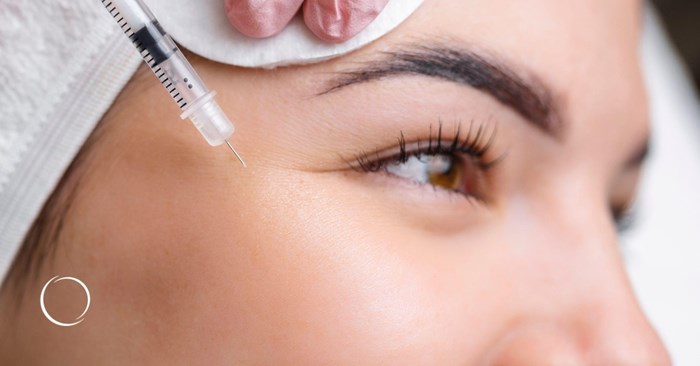
In the world of aesthetics, few topics spark as much curiosity and confusion as preventative Botox. Just take a quick scroll through social media, and you'll find everything from glowing endorsements to vague warnings and everything in between, often all shared with equal certainty. For younger patients in particular, the question tends to surface early: Is starting Botox in your 20s or 30s a proactive strategy for maintaining smooth, youthful skin, or is it an unnecessary step driven by social media trends?
At its core, the idea of preventative Botox centers on timing. Rather than treating wrinkles after they've fully formed, the goal is to intervene earlier, softening repetitive muscle movements before they leave a lasting imprint on the skin. While the concept sounds straightforward, the reality is often far more nuanced. Factors like genetics, facial anatomy, lifestyle and skin health all play a key role in how and when visible signs of aging actually appear.
To better understand the idea of preventative Botox, who it may benefit and where misconceptions tend to arise, we reached out to ASPS Member Surgeons Kristy Hamilton, MD, and Bianca Molina, MD.
What does preventative Botox mean?
Before jumping into proving or disproving the effectiveness of this concept, it's important to first have a base understanding of what it actually means. Despite how frequently the term is used, preventative Botox does not mean freezing the face before any signs of aging appear. Rather, it describes a more targeted, time-based approach to treatment.
"From a clinical standpoint, preventative Botox refers to using neuromodulators early, before etched-in lines become deeply established at rest," said Dr. Hamilton. "The goal is not to freeze a young face preemptively. It is to soften repetitive muscle movement early enough that permanent expression wrinkles do not develop."
This concept is widely shared, though experts may frame it slightly differently.
"When we use the term preventative Botox, we are really talking about targeting facial muscle action and preventing wrinkles from forming due to muscle action," said Dr. Molina. "You can think about this being true whether you are young or old, but the concept is sort of different based on your age."
Together, these viewpoints highlight a key takeaway – preventative Botox is less about age and more about muscle activity, skin behavior and timing.
Myth vs reality: Does starting early actually prevent wrinkles?
Here is where the conversation around preventative Botox tends to deviate.
"This is absolutely true," said Dr. Hamilton. "My own face is an example! I started preventative 'baby Botox,' and I do not have lines on my face. Repeated facial movements contribute to dynamic wrinkles, and botulinum toxin works by temporarily reducing the extremes of muscle movement. That means earlier, strategic treatment delays the progression of some expression lines."
However, it's important to remember that Botox is not a universal solution for all aging concerns.
"Note that they have to be lines caused by repetitive movements," said Dr. Hamilton. "Skin quality, genetics, sun exposure, lifestyle, collagen health and facial anatomy all matter too. The effects of facial aging, like the development of deep nasolabial folds or jowls, result from soft tissue descent and tissue laxity. Therefore, Botox will not help with these."
However, there is no surefire consensus among plastic surgeons on the use of preventative Botox in younger patients.
"Do not subscribe to the concept of preventative Botox where you are giving a young patient this neuromodulator to prevent the future appearance of wrinkles, when they don't have any wrinkles or skin creasing at baseline," said Dr. Molina.
There is an important distinction between premature use and maintenance-based prevention.
"If you are a patient who is already exhibiting wrinkling, and you then have another treatment at the appropriate three-to-four-month interval before wrinkling sets in again, then I think that can be thought of as preventative," said Dr. Molina.
In other words, the fact lies somewhere in the middle. Early on, strategic use can slow the formation of certain lines in the skin, but starting treatment without any visible need may not provide meaningful long-term benefits.
When does preventative Botox make sense?
One of the biggest misconceptions around Botox is that there's a "right age" to start treatments. In reality, timing should be based on what the face is doing, not how old a patient is.
"It is much less about age and much more about what the face is doing," said Dr. Hamilton. "I look for early dynamic lines that are beginning to linger, strong repetitive muscle movement, and whether the patient is starting to see visible creasing even after the expression has relaxed."
This approach underscores the importance of assessing patient-specific presentation rather than relying on age alone.
"I actually treat a range of patients, from 20s to 70s, and every person is different," said Dr. Molina. "Some late-20-year-old patients have significant forehead creasing already. These patients are candidates for Botox, in my mind, because they have a physical finding and it bothers them."
The common thread between the two surgeons is clear – preventative Botox is not a universal milestone. It's a response to visible patterns, not a preemptive ritual or treatment.
Can you start too early?
Botox is widely considered safe when administered by a qualified provider, such as a board-certified plastic surgeon, but starting too early or using it unnecessarily can come with trade-offs.
"If someone has no meaningful dynamic lines, then treating simply because social media told them they 'should' is not thoughtful medicine," said Dr. Hamilton. "Botox is a beautiful tool - but it should never become a reflex."
Beyond appropriateness of use, experts also caution about potential long-term effects.
"Over time, you may develop a resistance to the medication," said Dr. Molina. "Prolonged paralysis of a muscle eventually will cause it to atrophy and thin over the years, and potentially just an inability to get your normal expressiveness back."
The key takeaway here is that timing and restraint are just as important as the technique used when it comes to Botox or neuromodulator use.
Beyond Botox: Other ways to prevent signs of aging
One of the most consistent points that both surgeons made is that Botox is only one piece of a much larger, more complex anti-aging puzzle.
"Daily broad-spectrum sunscreen, high-quality skincare, retinoids when appropriate, antioxidant protection, good sleep, avoiding nicotine and protecting and stimulating collagen are foundational," said Dr. Hamilton. "Botox is one instrument in the orchestra, not the entire performance."
Across the board, experts emphasize that healthy skin is the foundation of any aesthetic outcome.
"People underappreciate the significance that their skin quality, health and appearance play in their overall appearance," said Dr. Molina. "Using daily sun protection and a simple yet consistent skincare routine will take you far."
In many cases, these foundational habits have a greater long-term impact than early injectables alone.
Final thoughts: Myth or fact?
Unfortunately, the answer to this question is not a clean yes or no. Preventative Botox is neither a universal necessity nor a marketing myth. Rather, it's a tool that can be effective when used thoughtfully, at the right time and for the right reasons.
"Don't treat a trend," said Dr. Hamilton. "Treat a need."
As interest in preventative Botox continues to grow, so does the importance of understanding what it can and cannot do. Early, strategic treatment may help slow the development of certain expression lines, but it isn't a one-size-fits-all solution nor a guarantee against aging. Facial anatomy, lifestyle factors and skin health all play equally important roles in how the face changes over time.
For many patients, the most effective approach isn't starting earlier, but starting smarter. By working with a board-certified plastic surgeon who prioritizes individualized care, patients can make informed decisions about when treatment is appropriate and when it may be better to wait. In an era where aesthetic trends move quickly and constantly, the most enduring results often come from a measured, thoughtful perspective, one that enhances what is already there rather than rushing to change it.
To find a qualified plastic surgeon for any cosmetic or reconstructive procedure, consult a member of the American Society of Plastic Surgeons. All ASPS members are board certified by the American Board of Plastic Surgery, have completed an accredited plastic surgery training program, practice in accredited facilities and follow strict standards of safety and ethics. Find an ASPS member in your area.