What to expect as a scar heals following plastic surgery
The scar maturation process can take six months to a year, and there are ways plastic surgeons and patients can help the healing along
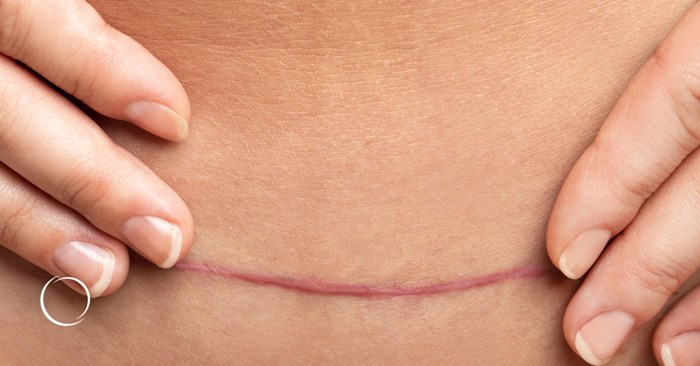
Will I have a scar? What will it look like? These are some of the most common questions anyone considering plastic surgery may have. The first thing to know is that plastic surgeons do everything they can to hide incisions in natural creases of the body.
"Our focus is on camouflaging scars, strategically placing them in areas that match normal lines – a lot of people have a crease right in front of their ear, and we can put [a facelift incision] right in it," said David Shafer, MD, FACS. "We can hide the incision in the natural crease at the bottom of the breast [during a breast augmentation]. The treatment of the scar really starts in the operating room with surgical technique."
After the procedure is complete, plastic surgeons use various techniques to support the healing process, even months after surgery, so their patients can have the most imperceptible scars possible.
"I always tell my patients, my job is not done the day of surgery," said Dr. Shafer. "I want to keep seeing them frequently, because I want to make sure that the healing process of that scar is maximized to have the best possible outcome."
That may include in-office treatments for smoothing scars, as well as giving patients advice to follow at home – avoiding certain movements to minimize tension during the first week or so after surgery, diligently applying sunscreen for six months postop and knowing that it's completely expected for a scar to look red and slightly textured before it flattens out and becomes the same color as the surrounding skin.
"I really tell patients not to concentrate too much on the appearance of the scar or get worried about it for even six months to a year after surgery, because it has to go through this long maturation," said Dr. Shafer. "You can think of the healing in terms of three different phases."
Here's what you can expect during each of the three phases:
The first two weeks after surgery
When you go home after surgery, your incisions will be covered with the dressing that your plastic surgeon applied.
"Usually right after the operation, we put on Steri-Strips or a new version called Sylke, which is flexible and stretches with the incision as it swells from standard postop swelling," said Melissa Doft, MD.
You'll leave with instructions from your surgeon on caring for the incision – usually, it's just about being hands off.
"This is the time when babying the incision is so important," said Dr. Shafer. "Leave it alone, keep it covered, and listen to the instructions that your surgeon gave you."
In the early days of recovery, that might include washing your hands frequently to help keep the incision site clean, reducing tension on the incision by avoiding certain movements (if you had a breast augmentation, for example, you wouldn't want to stretch your arms up right after surgery) and steering clear of environmental irritants by not smoking. Your surgeon can tell you how long to wait before showering and how long to keep the surgical dressing on – often a week or two.
"Don't do anything outside of the box," advised Dr. Shafer. "I've seen everything. I had one tummy tuck patient go in an herbal bath with rosemary one day after getting home."
These DIY treatments risk causing infection or irritation, and you really are better off not going down a rabbit hole reading about at-home scar remedies.
"Sometimes, if a patient shows up in my office two weeks after surgery, and they've never even removed the dressing, they may heal better than somebody who tried different creams and potions," said Dr. Shafer.
One unexpected thing that patients can do to help their healing right off the bat, he said, is to drink plenty of water.
"The body is a machine and has all these metabolic enzymatic processes going on, so just keeping things very simple – good nutrition, hydration and reducing tension on the incisions – in the first two weeks after surgery is probably the best thing you can do while you're healing," said Dr. Shafer.
The next few months
For several months – sometimes even half a year – after surgery, a scar may look red, which is actually a sign that it's healing. That's because the redness comes from what's going on under the skin.
"Blood flow and capillaries are supplying nutrients and oxygen needed for healing," said Dr. Shafer. "Healing factors are coming into play. You're also starting to make new collagen that's kind of gluing everything together to heal the scar, which might look worse before it looks better."
Certain treatments can reduce the look of redness in scars, and that's a big deal.
"For a lot of patients, it's the color that bothers them the most about the scar," said Dr. Doft.
Surgeons might recommend a series of treatments – one a month for three months, for example – with a pulsed dye laser, such as the Candela Vbeam or CUTERA excel V. If you push on a scar and it turns pale before returning to red again, you may be a candidate for these lasers, explained Dr. Shafer, adding he treats his own patients' scars with Vbeam at one month, two months and three months after surgery. Studies have shown scars may heal better following treatment with pulsed dye lasers.
Because scars may also have a noticeable texture during this phase of healing, surgeons may recommend smoothing treatments, as well. Dr. Doft has her patients apply a silicone gel called Silagen during the day and wear silicone tape overnight to "help smooth the scar, and alleviate redness as well as itchiness," adding it's not unusual for patients to have some itchiness for a few weeks. She also likes Aveeno's oatmeal moisturizers for soothing skin.
Around three months after surgery, additional treatments can help smooth raised scars, including fractional CO2 laser and microneedling, to stimulate collagen production.
"Microneedling can be great for helping the scar look flatter, and you can even do it at home using a microneedling roller, if you are instructed by your surgeon to do so," said Dr. Shafer.
However, the single most important aspect of this second phase of healing for most patients is something you can do at home – following a consistent, effective sun protection routine.
"Avoid direct sun on the scar for the first six months after surgery, because scars can be prone to sunburn, and the sun can cause discoloration of the scar that can be really hard to get out," said Dr. Doft.
If you're going to the beach and your scar is on your body, she recommends covering it with sun-protective UPF clothing (with built-in SPF) from a brand like Coolibar; if it is on your face, wear a wide-brimmed hat. No matter where the scar is located, if it is exposed to the sun, cover it with a high-SPF sunscreen, such as SPF 50. Mineral sunscreens, which rely on the physical blockers zinc oxide and titanium dioxide, are best, added Dr. Shafer, because chemical sunscreens can risk irritating scars.
Maintaining a consistent sun protection routine and avoiding environmental irritants, such as smoking, puts you in a great position to heal optimally.
"I could do the same surgery in 100 different patients, and when they leave the operating room, they all look the same, but they could heal differently, because there are these environmental factors," said Dr. Shafer.
Six months to a year after surgery
This is the third phase of healing, "when the scar matures, and it's when the collagen starts to flatten out, those capillaries recede, and the redness starts to go away," said Dr. Shafer.
If there is some lingering redness or texture, those can be treated with the same devices, such as a pulsed dye laser for redness, that plastic surgeons would use a month or so after surgery. But generally, all the healing factors – collagen, blood flow, etc. – that your body sent to the area of the scar earlier "are starting to settle," said Dr. Shafer. "Surgical scars tend to heal much better than other scars, like from injuries or falls, because [incisions made during surgery] are clean, even lines.
When do you need scar revision surgery?
Sometimes, scars may become hypertrophic, appearing thicker than they should, or develop into keloids, which can be wide and thick. A plastic surgeon can both diagnose and treat these types of raised scars. Injections of certain medications, such as steroids and 5-fluorouracil, "which is originally a skin cancer treatment, can really help with the appearance of scars," said Dr. Shafer.
If a scar cannot be smoothed by injections, then "we could then take that scar, cut it out very carefully, and sew it – and then it heals with no trauma, because we're not traumatizing it during the surgery," said Dr. Shafer, adding plastic surgeons can also perform scar revision surgery for scars left from past injuries or other surgeries.
To find a qualified plastic surgeon for any cosmetic or reconstructive procedure, consult a member of the American Society of Plastic Surgeons. All ASPS members are board certified by the American Board of Plastic Surgery, have completed an accredited plastic surgery training program, practice in accredited facilities and follow strict standards of safety and ethics. Find an ASPS member in your area.