Understanding fat-based fillers: alloClae, Renuva, Lipoderma and more
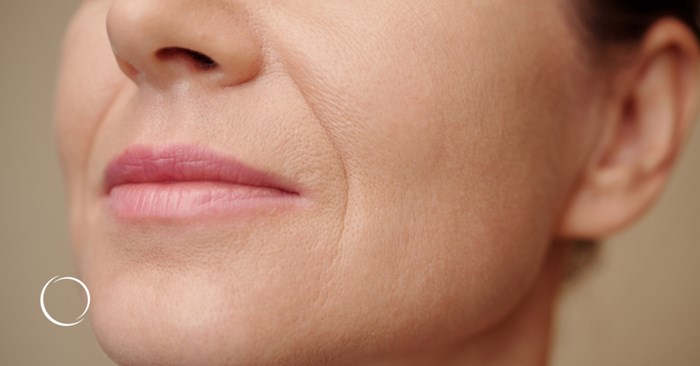
In the world of aesthetics, one exciting development is the shift towards treatments that work with the body, not just around it, and fat-based fillers are the perfect example. Designed to restore volume while supporting natural tissue reintegration, these innovative products are gaining attention from patients and surgeons alike who are after results that look subtle and soft but are long-lasting.
Unlike traditional fillers that add temporary volume, newer fat-based options like alloClae, Renuva and Lipoderma are engineered to mimic and/or stimulate the body's natural fat. They can help address contour irregularities and changes due to weight loss and age-related volume loss, while encouraging gradual, natural-looking improvement.
But what are fat-based fillers, and how are they used? Who are these fillers best suited for? To gather more insight into the topic of fat-based fillers, we reached out to ASPS Member Surgeons Johnny Franco, MD and Rikesh Parikh, MD, FACS.
The most popular fat-based fillers
Fat-based fillers have quickly become a leading option for patients seeking alternatives to fat transfer and other volume-restoration procedures.
"We have never had something specifically designed for use in the body, and we have never had a filler that is 'larger' volume for the body," said Dr. Franco. "No question this has been a hot topic! One point of view is that patients are experiencing changes as a result of using GLPs. The timing of releasing these products has been perfect with the GLP medications and weight loss."
Several fat-based fillers and fat-replacement products are on the market, but some are more popular with both surgeons and patients. One of the most talked-about options is alloClae, a new and exciting introduction to the market that is FDA-approved and made from donor cadaveric fat.
"This product has both fat cells and extracellular matrix, with 60 percent cells and 40 percent matrix," said Dr. Parikh. "Immediately, you're adding volume and getting lift from the tissue for an instant result. It acts as a scaffold on which collagen can regrow, volume can be restored and stem cells will migrate to that area. It lasts about one to three years as of now. We do not have a lot of long-term data at this point, so we do not have a lot of information around longevity."
Another fat-based filler generating buzz in aesthetics is Renuva.
"Renuva is entirely composed of extracellular matrix," said Dr. Franco. "It is limited in size in terms of volume and has some regenerative possibilities, but it lacks the filler and structural strength of fat."
Yet another exciting fat-based filler, newer to the market, is Lipoderma. Because it is so new, there is relatively little data around its longevity or applications, but it is a great option for some patients.
"Lipoderma is especially interesting because what we do not know is how much extracellular matrix you actually need for its integration," said Dr. Franco. "They are still doing their own longevity studies now, but we likely won't know the results until 2027."
Applications of fat-based fillers
While many patients may be familiar with the famous Brazilian butt lift, there are plenty of other procedures that successfully use fat-based fillers to restore volume and shape to the body. This includes both larger-volume areas and targeted parts of the body, such as hip dips and the breasts, as well as correcting deformities from liposuction.
As the use of GLP-1 medications grows, patients are increasingly experiencing the loss of volume that can come with weight loss. With targeted areas such as hip dips, traditional body-based filler may not be the best option, which is where fat-based filler can play a role.
"Because these fillers have the structural strength even more so than actual fat, we have seen lifting of the hip dip areas," said Dr. Franco.
These fat-based fillers are also seeing use in breast augmentation. With the growing popularity of autologous tissue-based augmentation, some patients and surgeons have opted for fat-based fillers as an alternative for those patients who do not have enough fat tissue to harvest via liposuction.
"One of our patients who underwent a procedure using fat-based fillers for breast surgery was just interviewed for Business Insider," said Dr. Franco. "She had no downtime following, perfect for the busy professional."
While there are many advantages of using fat-based fillers over fat transfer, the biggest may be longevity.
"In my experience using alloClae in particular, I have seen a 90 percent survival rate over one year," said Dr. Parikh. "Traditional fat grafting is typically about 40 to 50 percent over one year."
Additionally, leaner patients with lower BMI who do not have sufficient fat volume to harvest for transfer are benefiting from fat-based fillers.
"Fat replacement products have the advantage in lower BMI patients who do not have enough of their own fat to harvest for autologous transfer, as well as those patients who do not want to have a procedure with anesthesia or who do not want a lot of downtime," said Dr. Parikh.
The future of fat-based fillers
With such a focus on fat-based fillers and alternatives, there is an obvious interest in continued innovation in this area. One area of excitement is the introduction of a new product that caters to facial aesthetics rather than the body.
"There is a facial innovation coming out very soon, known as DermaClae," said Dr. Parikh. "This is still a donor fat-based product, but a smaller particle size that is suited for facial transfer."
One other exciting development in this field is the future affordability of fat-based filler products.
"A lot of companies are looking for ways to mass-produce some of these products in a way that is less tedious," said Dr. Franco. "Some are looking into opening up 'fat banking,' which will drive down costs dramatically."
These fat-based fillers ultimately represent an important step toward more regenerative, natural-looking aesthetic treatment options. By combining volume restoration with tissue support, these products offer patients an option that prioritizes subtlety, longevity and harmony with the body's own processes. With ongoing innovations and expanding applications, fat-derived technologies are likely to play an increasingly important role in plastic surgery, giving patients more options than ever to refresh their appearance in a way that feels authentic and lasting.
To find a qualified plastic surgeon for any cosmetic or reconstructive procedure, consult a member of the American Society of Plastic Surgeons. All ASPS members are board certified by the American Board of Plastic Surgery, have completed an accredited plastic surgery training program, practice in accredited facilities and follow strict standards of safety and ethics. Find an ASPS member in your area.