





Before & AfterPhotos
 View Photo Gallery
Get insights from our patient community, ask a plastic surgeon anything, view the before-and-after photo gallery, discover the latest beauty news and book a consultation.
Research ASPS member surgeons in your area and book a consultation.
Get authoritative, trustworthy answers from ASPS member surgeons.
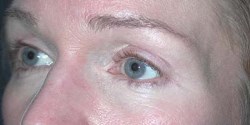
Dear Sir/Madam, I’m 23 years old and I had an eyebrow lift procedure 1,5 months ago. I had 62.5 units injected into my glabella area and the sides of the eyebrows. Unfortunately I am experiencing some side effects. My brows dropped and as a result my eyes look more hooded than normal. My question is: how long does it take before dysport wears of and when will the side effects go away and when wil
I feel really insecure about my nose on the side profile. From a surgeons perspective, do I still look attractive with the nose I have or do I need surgery?
I was wondering if I would be able to get a reduction if I’m over weight? I’m 5’2 and 209lbs. I have a DDD and they give me back pain which makes doing physical activity hard and i will also get a rash under and between my breast because they sag. Will I need to drop to a specific weight before I can get the surgery or can I go through with one to help alleviate my back pain to further exercise?
Dear Sir/Madam, I’m 23 years old and I had an eyebrow lift procedure 1,5 months ago. I had 62.5 units injected into my glabella area and the sides of the eyebrows. Unfortunately I am experiencing some side effects. My brows dropped and as a result my eyes look more hooded than normal. My question is: how long does it take before dysport wears of and when will the side effects go away and when wil
I feel really insecure about my nose on the side profile. From a surgeons perspective, do I still look attractive with the nose I have or do I need surgery?
I was wondering if I would be able to get a reduction if I’m over weight? I’m 5’2 and 209lbs. I have a DDD and they give me back pain which makes doing physical activity hard and i will also get a rash under and between my breast because they sag. Will I need to drop to a specific weight before I can get the surgery or can I go through with one to help alleviate my back pain to further exercise?
Hi do you guys know who accepts MA insurance i live in saint Paul MN and i was born intersex my father made me in to a man and looking to do breasts and reassignment surgery to please help.
"I really think it's important for us as board-certified plastic surgeons to be able to offer the full toolbox so patients don't feel like they need to kind of hit a non-board-certified provider for a nonsurgical option."
"If your implant is ruptured on your imaging, is this an emergency? It's not. We typically recommend that if you have a ruptured silicone implant, it's replaced sometime within the first six months after the rupture is identified."

Jennifer Trettner, one of our 2026 Patients of Courage, was nominated by Kenneth Kneessy, MD, FACS.

Some parts of our bodies just seem to show their age sooner. A few you can cover, and others, like the neck, you can't, at least not completely. Turtlenecks and scarves never reach high enough to disguise the subtle and sometimes not-so-subtle sag.

There are several options for breast reconstruction, and of course there's the option to have no reconstruction at all. Advances in surgical technique have made it possible to preserve more sensation in the breast, and to deliver more natural-looking results with less pain for patients.

One complication of significant, rapid weight loss is excess, bothersome loose skin. Weight comes off quickly, but in many cases the skin doesn't bounce back the same way, leaving patients with loose, sagging skin or uncomfortable volume loss in certain areas of the body.