Regenerative aesthetics: PRP, PRF and beyond
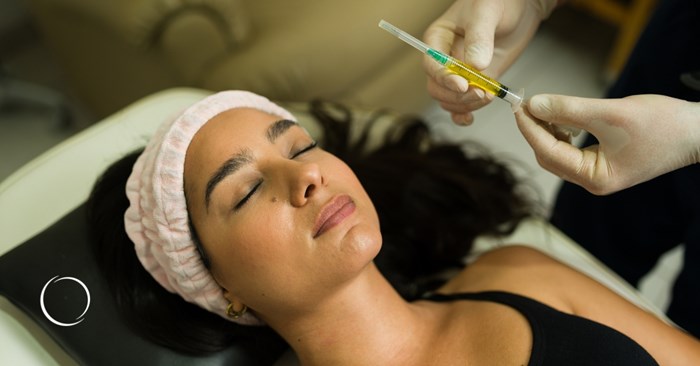
There's no denying the unmatched focus on maintaining a youthful appearance in the world of aesthetics. From fillers and neurotoxins to facelifts and neck lifts, there is a litany of surgical and noninvasive procedures to help treat the fine lines, wrinkles and skin laxity that come with growing older. Yet, what if there was something that could use the biology and foundation of our own body to produce aesthetic results? Enter the world of regenerative aesthetics.
Rather than focusing on temporarily restoring lost volume or artificially improving the skin's appearance, regenerative aesthetics uses the tools already within our bodies to produce remarkable effects. There are many emerging tools in this area, from platelet-rich plasma (PRP) and platelet-rich fibrin (PRF) to the exploration of our actual stem cells, which can help reduce the signs of aging in the skin and rebuild structure to better support long-term results.
What does this process entail, and is it actually effective? What are the most popular current treatments in the field of regenerative aesthetics? To learn more about the emerging realm of regenerative aesthetics and future applications for patients, we reached out to ASPS Member Surgeons Kristy Hamilton, MD, and Daniel Beck, MD.
The basics of regenerative aesthetics
It's important to begin with a baseline understanding of what regenerative aesthetics actually is.
"Regenerative aesthetics is the next generation of anti-aging," said Dr. Beck. "Rather than relying on synthetically processed fillers or threads to temporarily restore volume, we're using your body's own biology to strengthen, rebuild and renew the foundation itself."
In a way, surgeons are aiming to "hack" your biology and anatomy to provide aesthetic results without the need for surgery.
"What we're trying to do is encourage the body or face to rejuvenate itself," said Dr. Hamilton. "We're tapping into our own power to produce collagen, elastin and all of the components that create healthy skin and soft tissue, even hair!"
Rather than relying on injectables to add volume, the goal of regenerative aesthetics is to build a solid foundation that lasts.
"The goal isn't to create a look that fades when the product dissolves, it's to awaken your skin's natural repair systems so it continues improving long after treatment," said Dr. Beck. "Regenerative techniques like PRP, PRF, exosomes and stem-cell therapies stimulate collagen, elastin and vascular growth from within, which not only improves tone and texture but restores natural volume where the face has thinned or deflated over time. Instead of adding artificial fullness, regenerative aesthetics reactivate your body's own ability to produce and maintain youthful volume, skin that looks firmer, feels denser and radiates health from the inside out. You're not covering up aging; you're retraining your skin to age differently."
Popular tools and procedures within regenerative aesthetics
This may be an emerging field, but there are several well-established regenerative aesthetic procedures that surgeons can utilize with their patients, such as the increasingly popular platelet-rich plasma.
"PRP is where it began," said Dr. Hamilton. "It was for people looking for alternatives to filler, rejuvenate but not volumize."
So how does PRP work, and what benefits does it offer?
"PRP is like sending a team of your body's own first responders directly to where they're needed most," said Dr. Beck. "We draw a small amount of your blood, separate out the platelets, which are loaded with growth factors and healing proteins, and reintroduce that concentrated plasma into targeted areas. Those platelets release chemical 'signals' that tell your body to build new collagen, repair tissue and increase circulation. PRP strengthens the skin's architecture, improves tone and texture and restores radiance from the inside out. It's also one of the safest, most versatile tools we have, and can be used on multiple treatments throughout the body – perfect for treating crepiness of the thin skin under the eye, stimulating hair follicles for hair restoration or reducing inflammation and speeding up post-laser recovery."
In addition to PRP, another popular treatment option is platelet-rich fibrin.
"The natural evolution from PRP is PRF – a more concentrated, slower release of these growth factors than the PRP itself," said Dr. Hamilton.
So, how does PRF compare to its predecessor?
"PRP was and still is a cornerstone treatment in regenerative aesthetics, but today we have new ways to take concentrated growth factors to the next level," said Dr. Beck. "PRF extends the life of those growth factors, creating a slow-release effect for prolonged tissue stimulation. When combined with non-crosslinked hyaluronic acid or light activation, results become even more amplified."
Another emerging treatment option within regenerative aesthetics is platelet-derived growth factor (PDGF).
"This one is interesting because it's synthesized in the lab, so it mimics what's found in you or me," said Dr. Hamilton. "If you have an injury, the first cell that comes to the scene is the platelet, which will release PDGF and trigger the entire wound-healing cascade. If we can initiate PDGF, the body will then recruit everything else in the wound-healing cascade and begin regenerating tissues."
Finally, we have an emerging treatment within regenerative aesthetics that is considered controversial by some, but nonetheless exciting – exosomes.
"The real breakthroughs are happening with exosomes, microscopic messengers that act like cellular text messages, delivering powerful instructions to damaged cells to regenerate," said Dr. Beck. "We're also exploring stem-cell-derived factors and fat-harvested growth components that can remodel tissue from the ground up. The future of regenerative aesthetics is about synergy, blending these biologics to not just enhance appearance, but restore cellular function."
Ideal candidates for regenerative aesthetics
This field may be intriguing to a wide range of patients, but some groups are better suited for regenerative procedures than others.
"The best candidates are those who notice subtle changes in skin texture, elasticity or volume and want to get ahead of the curve," said Dr. Beck. "It's similar to maintaining your car; routine tune-ups keep it running optimally, so you don't have to replace the engine later. Preventative patients in their 30s and 40s tend to see the most transformative results because we're working with tissue that's most responsive. But even patients with advanced laxity or volume loss can benefit; they just need a series of treatments to rebuild the foundation gradually. Prevention is always easier than repair, but the opportunity for regeneration never expires."
Final thoughts about regenerative aesthetics
When considering pursuing regenerative aesthetics, it's important to select the right surgeon and procedures to achieve the results you're after. Consult with a board-certified plastic surgeon to determine which options are right for you. In addition, it's also crucial to keep in mind that these results will thrive in a healthy environment.
"The best results come when patients support the process with proper nutrition, hydration, consistent skincare and good sleep," said Dr. Beck. "If your body's factory is running well, the repair systems we activate will perform exponentially better. These therapies give your skin everything it needs to rebuild, the design instructions and the raw materials. When both are in sync, regeneration accelerates and results compound over time. Using medical-grade skincare, protecting against UV damage and maintaining a balanced lifestyle can make a dramatic difference in how long your results last."
With the emergence of the new, innovative field of regenerative aesthetics, there is so much to learn and even more to be excited about. From PRP and PRF to PDGF and exosomes, we are seeing the evolution of this new regenerative phenomenon in real time.
To find a qualified plastic surgeon for any cosmetic or reconstructive procedure, consult a member of the American Society of Plastic Surgeons. All ASPS members are board certified by the American Board of Plastic Surgery, have completed an accredited plastic surgery training program, practice in accredited facilities and follow strict standards of safety and ethics. Find an ASPS member in your area.