Before & AfterPhotos
 View Photo Gallery

Major holidays like Thanksgiving, Hanukkah, Christmas, Kwanzaa and New Year's Eve are already right around the proverbial corner, and everyone wants to look and feel their best when friends and family roll into town to celebrate.

Plastic surgery is entering 2027 with a new set of priorities. While natural-looking results remain popular, patients are also thinking more carefully about how procedures fit their bodies, their lifestyles and their long-term goals.
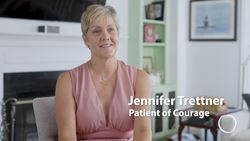
Breast cancer and reconstructive surgery challenged both her body and spirit, but Jennifer Trettner refused to let it define her future. She relied on exercise to rebuild her strength, restore her confidence and reclaim a sense of control during recovery.
Terms like "cadaver tissue graft," "fat harvesting" and "skin flap" can sound more at home in a Halloween movie than in an operating room. Add "vampire treatments" to the mix, and it's easy to understand why someone encountering these plastic surgery terms for the first time might do a double – or triple – take.

A different approach to body contouring consultations may help improve patient access, according to a new study. Patients seeking plastic surgery may benefit from an initial appointment with an advanced practice provider (APP). APPs include physician assistants and nurse practitioners.

Some parts of our bodies just seem to show their age sooner. A few you can cover, and others, like the neck, you can't, at least not completely. Turtlenecks and scarves never reach high enough to disguise the subtle and sometimes not-so-subtle sag.

There are several options for breast reconstruction, and of course there's the option to have no reconstruction at all. Advances in surgical technique have made it possible to preserve more sensation in the breast, and to deliver more natural-looking results with less pain for patients.

One complication of significant, rapid weight loss is excess, bothersome loose skin. Weight comes off quickly, but in many cases the skin doesn't bounce back the same way, leaving patients with loose, sagging skin or uncomfortable volume loss in certain areas of the body.

Social media platforms and even traditionally trusted websites are being flooded with AI-enhanced and altered images, leaving patients to question whether what they see is a real result or a highly stylized, overinterpreted version of a surgical transformation.

Vulnerability, stress and anxiety are common emotions that patients experience when they know that a surgical procedure is going to require anesthesia, especially because there is a lot of confusion and misinformation about anesthesia and the role it plays during surgery.