Remembering an innovator and legend of the specialty
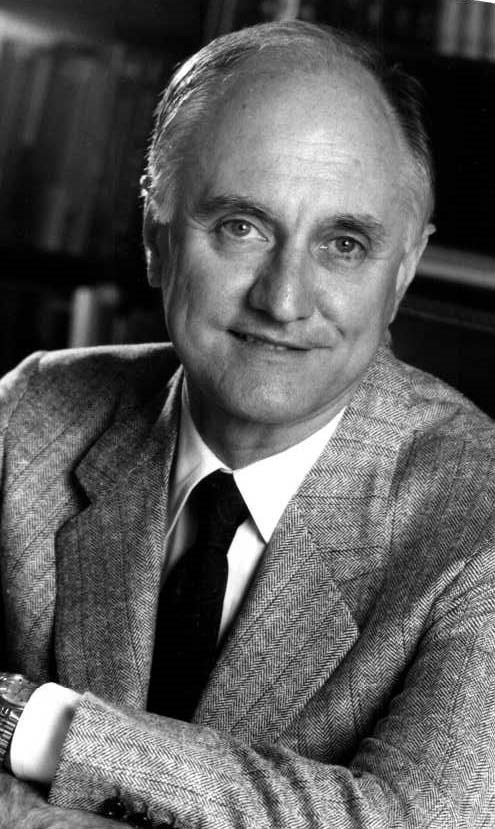
Linton A. Whitaker, MD, passed away Feb. 14 in Bryn Mawr, Penn., at age 89. Dr. Whitaker leaves an indelible imprint on the discipline of plastic and craniofacial surgery. For readers of PSN – and, truly, the specialty at large – his name is synonymous not only with technical innovation, but with institutional vision and an uncompromising commitment to advancing the care of patients with complex craniofacial differences. His career reflects the arc of modern craniofacial surgery itself – emerging from bold beginnings to a mature, multidisciplinary field grounded in science, collaboration and humanity.
Dr. Whitaker was born in Austin, Texas, in 1936, and attended Austin High School before beginning his undergraduate work at the University of Texas. He completed medical school at Tulane University, New Orleans, and then migrated north to Montreal to become a neurosurgeon. It was in Montreal that he met the love of his life, Renata, and transitioned to a career in plastic surgery, before making what would be his final move to Philadelphia.
Dr. Whitaker, in 1970, spent time with Paul Tessier, MD, the father of modern craniofacial surgery and brought craniofacial surgery to the United States, establishing the first fellowship and pioneering techniques that Tessier had employed in adults in children.
Trained in the era when craniofacial surgery was still defining its identity, Dr. Whitaker quickly distinguished himself as a surgeon willing to confront the most formidable deformities. At a time when congenital and acquired craniofacial conditions were often undertreated or relegated to fragmented care, he envisioned something more comprehensive: coordinated, longitudinal management delivered by a team united around the whole patient. This philosophy would become the foundation of his most enduring institutional achievement: The Center for Human Appearance (CHA) at the University of Pennsylvania and Children's Hospital of Philadelphia.
The CHA was more than a clinical program; it was a reimagining of how complex craniofacial care could be organized. Dr. Whitaker assembled plastic surgeons, oral surgeons, oculoplastic surgeons, ENTs and psychology/neuroaesthetics into a cohesive unit long before "multidisciplinary" teams became a ubiquitous descriptor. The CHA became a leading think-tank for the study of human appearance and its many effects on human existence, the "centrality of appearance," as Dr. Whitaker called it.
He was a founding member of the International Society of Craniofacial Surgery, reflecting his belief that the field required global collaboration, rigorous scholarship and shared technical innovation. For Dr. Whitaker, craniofacial surgery was not merely a professional pursuit – it was his life's work.
Technically, Dr. Whitaker was fearless and exacting. He contributed to advances in cranial vault remodeling, midface advancement and secondary cleft and orthognathic reconstruction. He emphasized meticulous preoperative analysis and a disciplined intraoperative approach grounded in anatomy and long-term growth considerations. For him, craniofacial surgery was not episodic intervention; it was stewardship of a child's development over years – sometimes decades. This longitudinal perspective shaped both his operative philosophy and his research agenda, as he sought to refine timing, technique and outcome assessment. The "Whitaker Classification" for craniosynostosis outcomes assessment has withstood the test of time and is one of the most broadly employed metrics in the craniofacial literature.
Still, if one were to isolate his most transformative contribution, it would be education. Dr. Whitaker trained a generation – indeed, multiple generations – of plastic surgeons who would go on to lead departments, divisions and craniofacial programs across North America and beyond. His trainees describe a demanding mentor who expected intellectual rigor and technical excellence in equal measure. He was known to challenge residents and Fellows in conference, pressing them to defend their operative plans and to articulate not merely what they would do, but why.
He cultivated independent thinkers. In an era when surgical training could be hierarchical, Dr. Whitaker encouraged questioning and innovation, provided they were grounded in data and thoughtful analysis. Many of his former Fellows now serve as chiefs of plastic surgery, directors of craniofacial centers and leaders within national and international societies. The dispersion of his trainees across the surgical landscape is itself a testament to his influence; through them, his philosophy of care continues to shape thousands of patients' lives each year.
Beyond his professional achievements, Dr. Whitaker brought to his work a distinctive personal character. A proud Texan, he carried himself with warmth, candor and quiet confidence. Colleagues recall his direct manner, generous mentorship and steadfast loyalty. He maintained an enduring 62-year marriage to his beloved wife, Renata, whose partnership and support were central to his life. Together, they built a family and a community grounded in devotion and resilience – qualities that mirrored Dr. Whitaker's professional ethos.
His contributions will be measured not only in scholarly citations or institutional milestones, but in the lives of the patients and families whose care was transformed by his vision. We honor Dr. Whitaker for his extraordinary service, leadership and devotion to the mission of plastic and craniofacial surgery. His legacy remains woven into the fabric of our specialty and into the global community of surgeons he helped to shape.